
Blog
Boxing Headgear Manufacturer: OEM Sourcing & Foam Guide

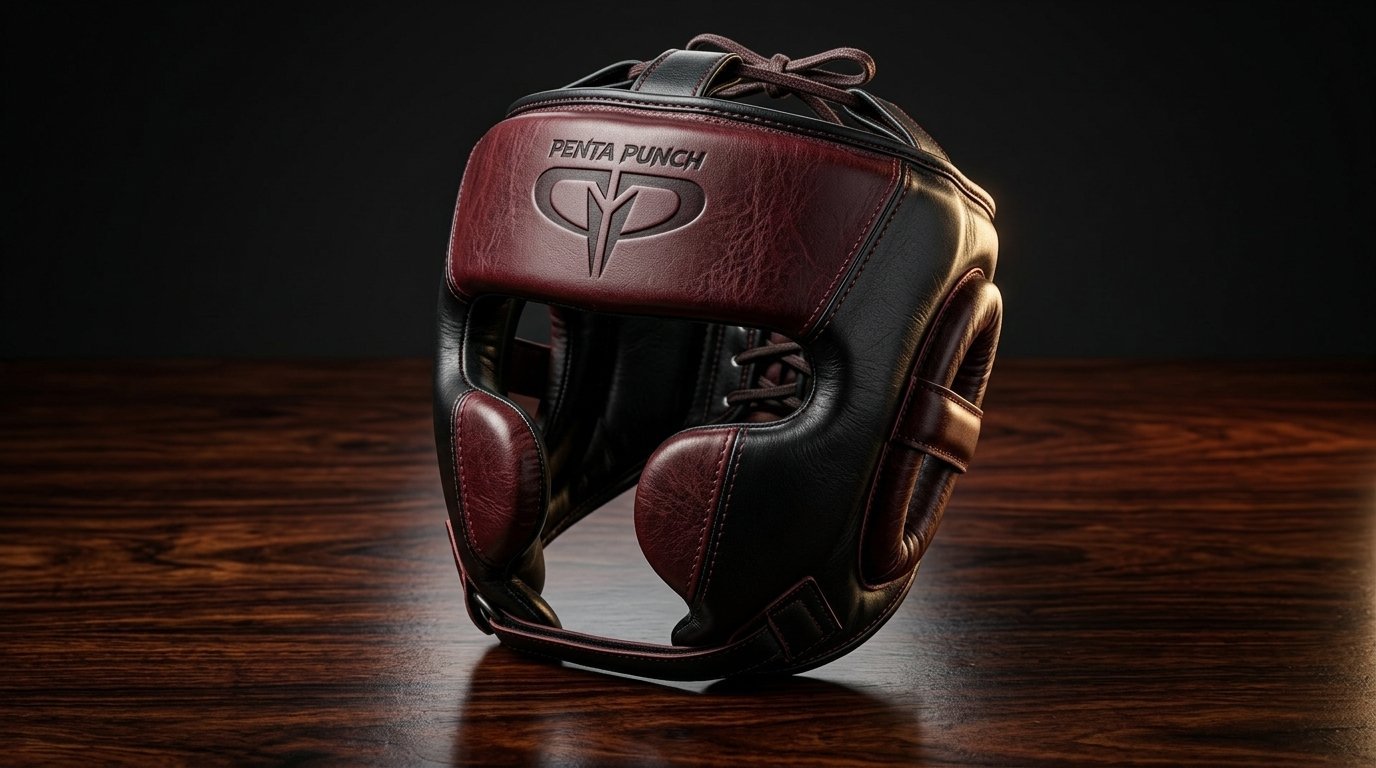
An enterprise buyer’s guide to foam layering density, peripheral vision engineering, leather selection, and OEM private label production standards.
In commercial combat sports equipment portfolios, protective headgear represents a critical bridge between fighter safety and brand credibility. Whether sourcing gear for a global equipment brand, a chain of boxing academies, or an Amazon private label business, evaluating a boxing headgear manufacturer requires a rigorous understanding of shock absorption mechanics, anatomical fitting, and material durability.
Unlike standard boxing gloves, where padding focuses primarily on hand protection and punch impact delivery, headguards must manage multidirectional impacts while maintaining a secure, non-slip fit and preserving peripheral vision. Poorly engineered headgear leads to dangerous slippage during sparring, premature foam breakdown, and obstructed sightlines—factors that directly compromise user safety and damage brand reputation.
This guide examines the core engineering parameters involved in OEM and ODM headgear production: from multi-layer foam core construction and style classifications to leather material sourcing, vision field calibration, and quality control inspection standards.
Headgear returns in the B2B sector are overwhelmingly caused by poor sizing calibration and slippage due to sweat accumulation on low-grade inner liners. Specifying moisture-wicking synthetic suede or anti-bacterial lining during the OEM sampling phase reduces return rates by up to 70%.
1. The Strategic Role of Headgear in Commercial Portfolios
Adding protective headgear to an equipment line requires balancing regulatory requirements with target user expectations. Amateur sanctioning bodies (such as USA Boxing and IBA) mandate specific open-face designs without cheek guards for competition, whereas commercial gym members and professional fighters prioritize full-face protection during heavy sparring.
For equipment brands, headguards offer high profit margins and strong brand visibility. Positioned directly at eye level during sparring sessions and media coverage, custom branded headguards serve as highly visible promotional assets for your brand identity.
2. Boxing Headgear Styles: Open Face, Cheek, Full Face & Bar Guards
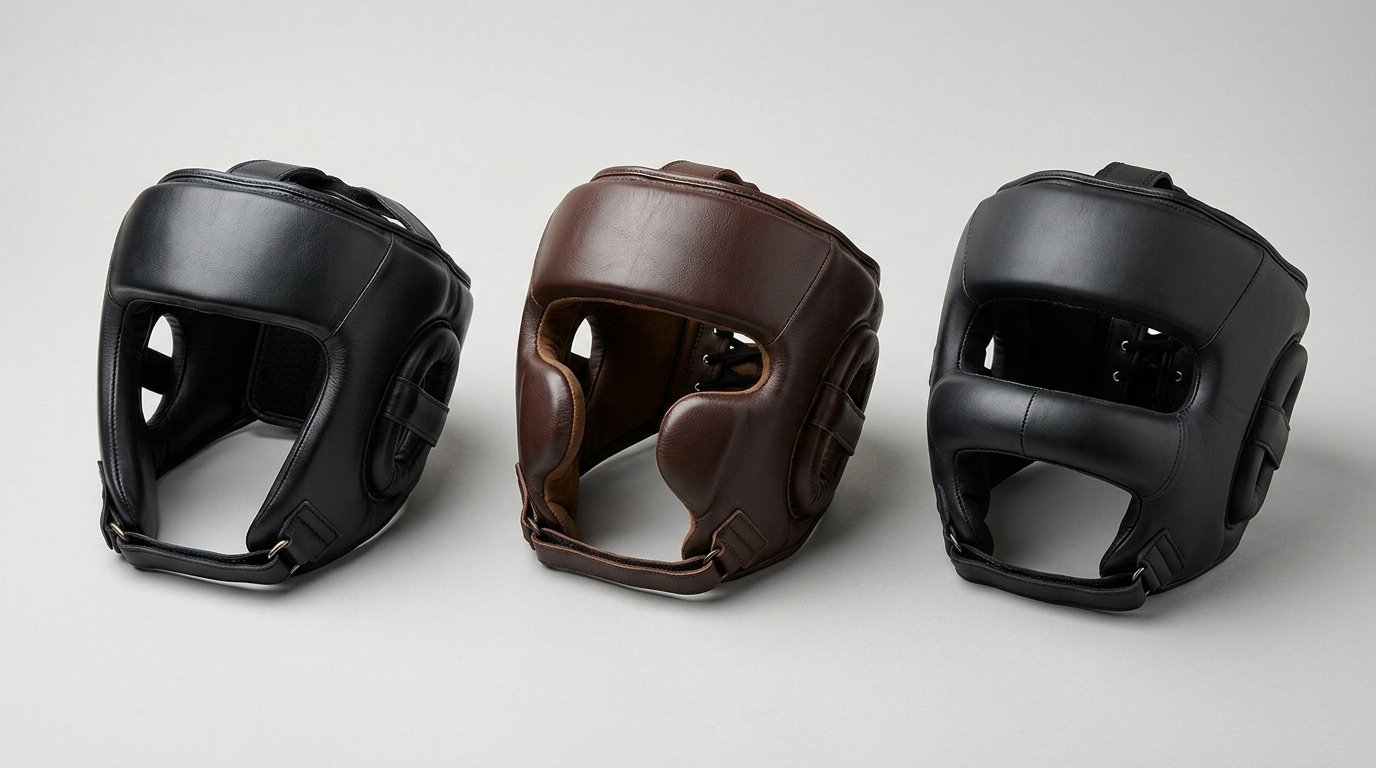
Factory production of boxing headgear falls into four primary structural categories. Each design targets a distinct search intent, user persona, and protective profile:
Open-Face Competition Headguards
Open-face headguards leave the cheekbones, nose, and mouth exposed while protecting the forehead, temples, and back of the head. Designed primarily for amateur competition, they maximize peripheral vision and air ventilation. OEM specifications must strictly adhere to weight limits (typically 10oz to 12oz) and approved foam thickness standards.
Cheek-Protection Sparring Headguards
Representing over 60% of commercial headgear sales, cheek-protection designs incorporate padded wings extending over the zygomatic arch (cheekbones). They offer an ideal balance between orbital bone protection and unobstructed down-the-center sightlines, making them the standard choice for general gym sparring.
Full-Face & Face Saver Bar Guards
Full-face headguards add chin padding, while face saver (or bar) guards integrate an internal steel, aluminum, or molded plastic cross-bar across the nose bridge. Bar guards prevent direct contact to the nose and facial surface during intense sparring, making them essential for professional boxers during pre-fight training camps.
3. Foam Layering Technology: EVA, High-Density Foam, and Latex Cores
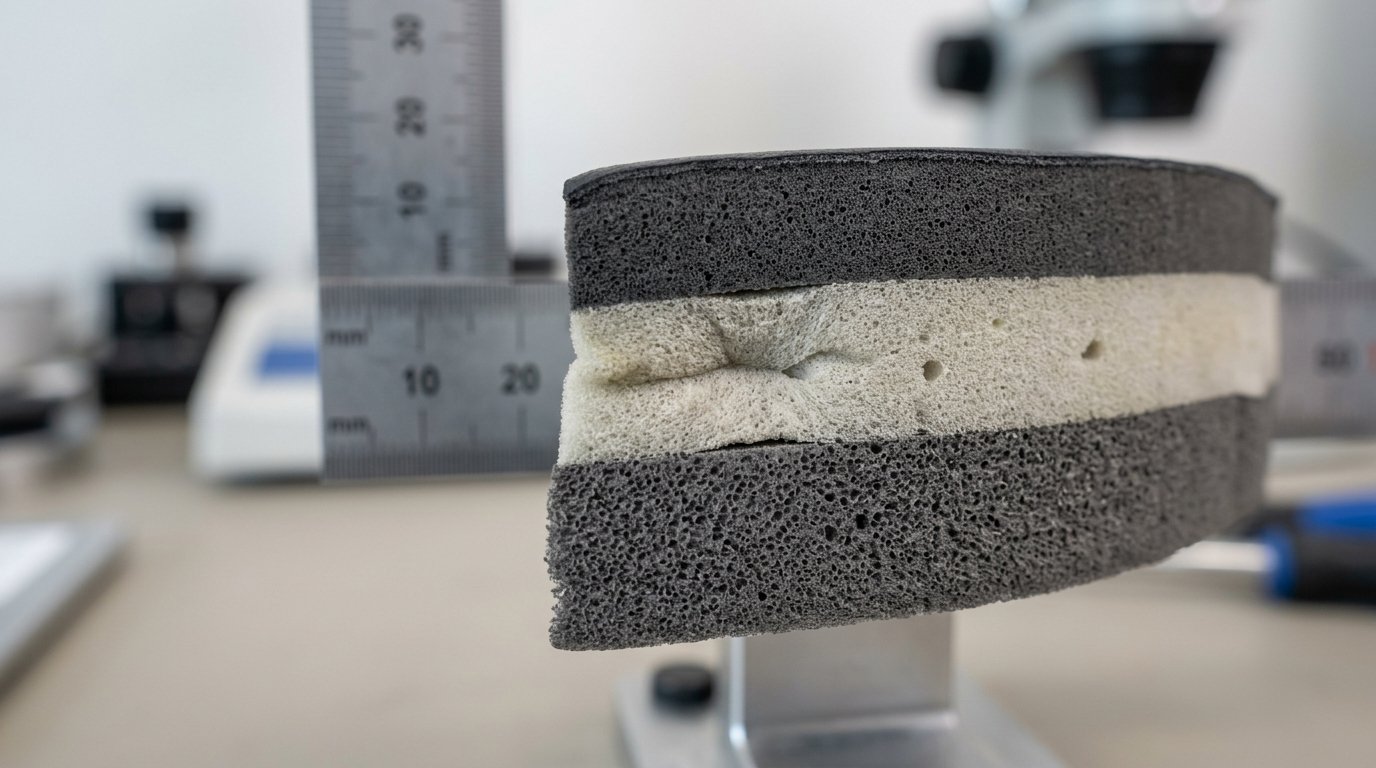
The protective performance of a headguard depends almost entirely on its internal foam core architecture. Single-density foam cores break down quickly under repeated impacts and fail to absorb high-velocity strikes. Enterprise manufacturers utilize multi-layered foam matrices engineered for progressive kinetic energy dissipation.
| Foam Layer Type | Density Range | Primary Function | Structural Position |
|---|---|---|---|
| High-Density EVA Base | 80 – 110 kg/m³ | Structural stability & impact deflection | Outer core boundary layer |
| Natural Molded Latex | 65 – 85 kg/m³ | Kinetic energy absorption & rebound resilience | Central shock-absorbing core |
| Open-Cell Memory Foam | 40 – 55 kg/m³ | Cranial contouring & pressure point reduction | Inner user-contact layer |
In a premium tri-layer system, the outer EVA layer disperses initial shock across a broader surface area. The central natural latex core compresses to absorb concussive force, while the soft inner memory foam cushions the cranium, providing a comfortable, custom fit.
4. Anatomical Fit, Ear Protection & Vision Field Engineering
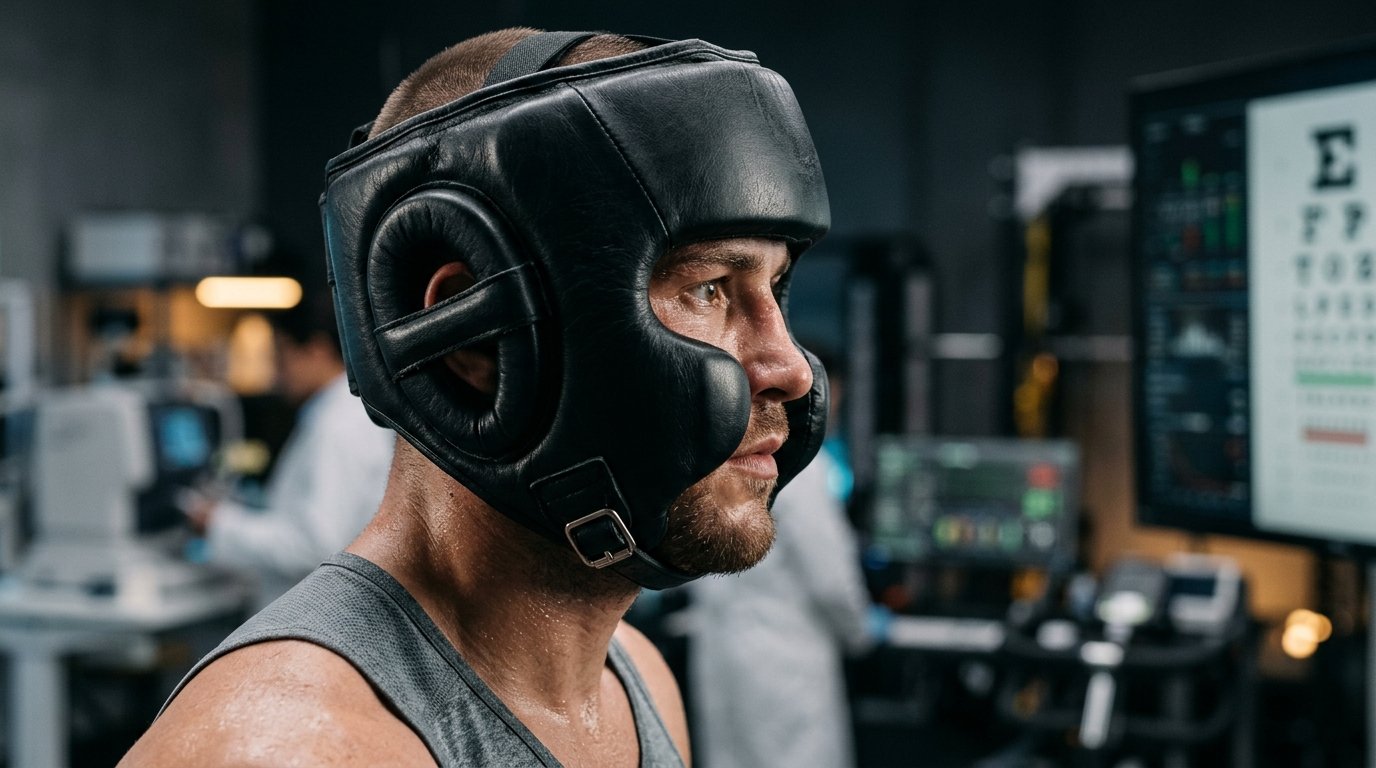
Improperly fitted headgear shifts during sparring impact, forcing the fighter to constantly adjust their gear and exposing vulnerable areas of the head. Enterprise OEM headguard designs incorporate three essential structural fit mechanisms:
- Anatomical Ear Padding: Padded ear channels feature a horizontal protective bar to absorb side strikes while incorporating central air-vent holes. These air release channels prevent dangerous air-pressure spikes on the eardrum during direct side impacts.
- Vision Arc Calibration: The eye cavity geometry must maintain a minimum 105° lateral vision field. Excessive cheek pad protrusion narrows sightlines, making punches hard to spot.
- Dual Closure Retention: Top lace-adjustment systems conform to varying crown heights, while rear dual-strap hook-and-loop closures ensure quick, locked-in fitting without loosening during heavy sparring.
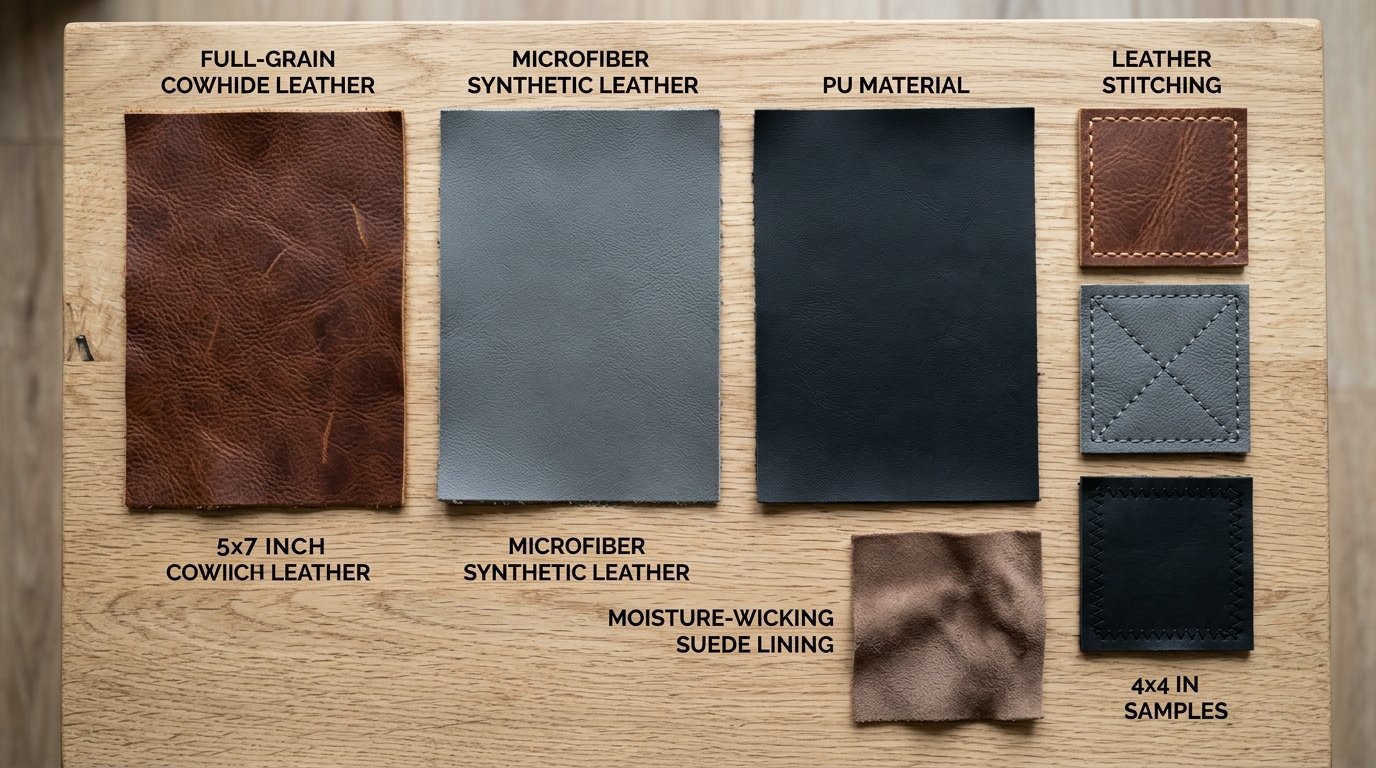
5. Outer Shell Materials: Cowhide Leather vs. Microfiber vs. PU
Selecting the outer shell material directly impacts production cost, product weight, and long-term tear resistance. Below is a comparative breakdown of primary materials used in factory production:
| Material Type | Tensile Strength | Sweat Resistance | Relative Unit Cost | Best Commercial Use Case |
|---|---|---|---|---|
| Full-Grain Cowhide Leather | Very High (220+ N) | Moderate (Requires care) | High ($$$) | Premium flagship lines & professional fight camps |
| Microfiber Synthetic Leather | High (200+ N) | Excellent (Hydrolytic resistance) | Medium ($$) | High-performance vegan gear & commercial gyms |
| Engineered PU Synthetic | Moderate (120+ N) | Good | Budget ($) | Entry-level consumer lines & high-volume retail |
6. OEM Customization & Factory Quality Control
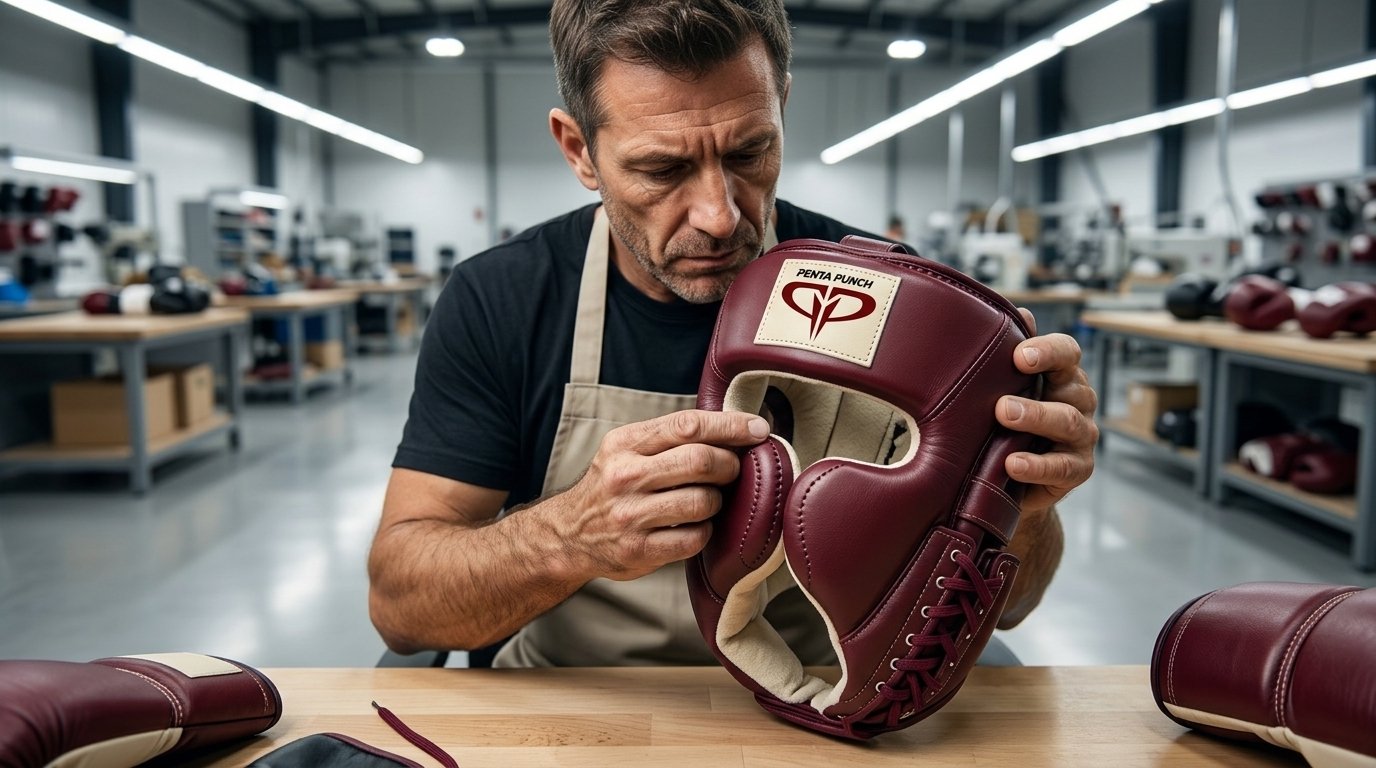
Partnering with an experienced manufacturer allows brand owners to implement private label customization across multiple design touchpoints:
- Branding Applications: High-density forehead logo embroidery, embossed leather patches, screen-printed chin straps, and custom woven inner labels.
- Reinforced Seams: Heavy-duty 6-ply nylon stitching at high-stress tension points along cheek-pad junctions and strap connections.
- Drop-Impact Testing: Verification against EN 13277-4 martial arts protective standards to ensure peak impact force reduction before mass export shipment.
7. Buyer’s Checklist for Evaluating Headgear Suppliers
- Foam Specification: Does the supplier provide multi-layer EVA/Latex combination cores, or rely on cheap single-layer recycled foam?
- Inner Liner Quality: Is the inner lining anti-bacterial and non-slip (e.g., amara or synthetic suede) to prevent slippage during intense use?
- Ear Protection & Ventilation: Are ear channels fitted with central pressure-release holes and protective cross-bars?
- Customization & Branding Capabilities: Can the manufacturer execute 3D embroidery, custom contrast stitching, and woven label placements?
- MOQ & Lead Times: Does the factory offer manageable pre-production sample turnaround (7–10 days) and reasonable bulk production lead times (30–45 days)?
Frequently Asked Questions
What is the ideal foam thickness for commercial boxing sparring headgear?
For commercial sparring headgear, the optimal padding thickness ranges between 1.25 inches (32mm) and 1.5 inches (38mm). This is typically achieved using a tri-layer construction combining high-density EVA shock absorption base foam, open-cell memory foam for comfort, and a high-density latex foam outer layer.
How does cheek protection impact peripheral vision during sparring?
Well-engineered cheek guards extend forward to cushion the zygomatic bone without obstructing the lateral peripheral field. Professional OEM manufacturing standards maintain a minimum 105-degree visual arc to ensure fighters can spot incoming hooks and uppercuts.
Is genuine cowhide leather better than microfiber leather for OEM headgear?
Full-grain cowhide offers superior moisture absorption and traditional premium feel, making it ideal for luxury brand collections. However, high-grade microfiber leather matches cowhide’s tensile strength, offers superior moisture resistance, lowers unit weight by up to 15%, and provides a cost-effective vegan alternative.
What are typical Minimum Order Quantities (MOQ) for custom OEM boxing headgear?
Standard factory Minimum Order Quantities for private label custom headgear typically range from 50 to 100 units per style and colorway. Lower MOQs allow startup brands to enter the market while maintaining cost efficiency.
What drop-impact testing standard applies to combat sports headguards?
Enterprise manufacturers test protective headguards against EN 13277-4 (Protective equipment for martial arts) shock absorption standards, measuring peak acceleration (g-force transmission) upon impact to ensure headguards reduce concussive force spikes below safety thresholds.
Build Your Custom Boxing Headgear Line with Pentapunch
Pentapunch is a direct manufacturer of professional combat sports equipment in Sialkot, Pakistan. We provide full-service OEM, ODM, and Private Label headgear production with custom foam layering, high-grade leather selection, and custom branding.