
Blog
Custom Mouthguard Manufacturer: OEM & Private Label Guide

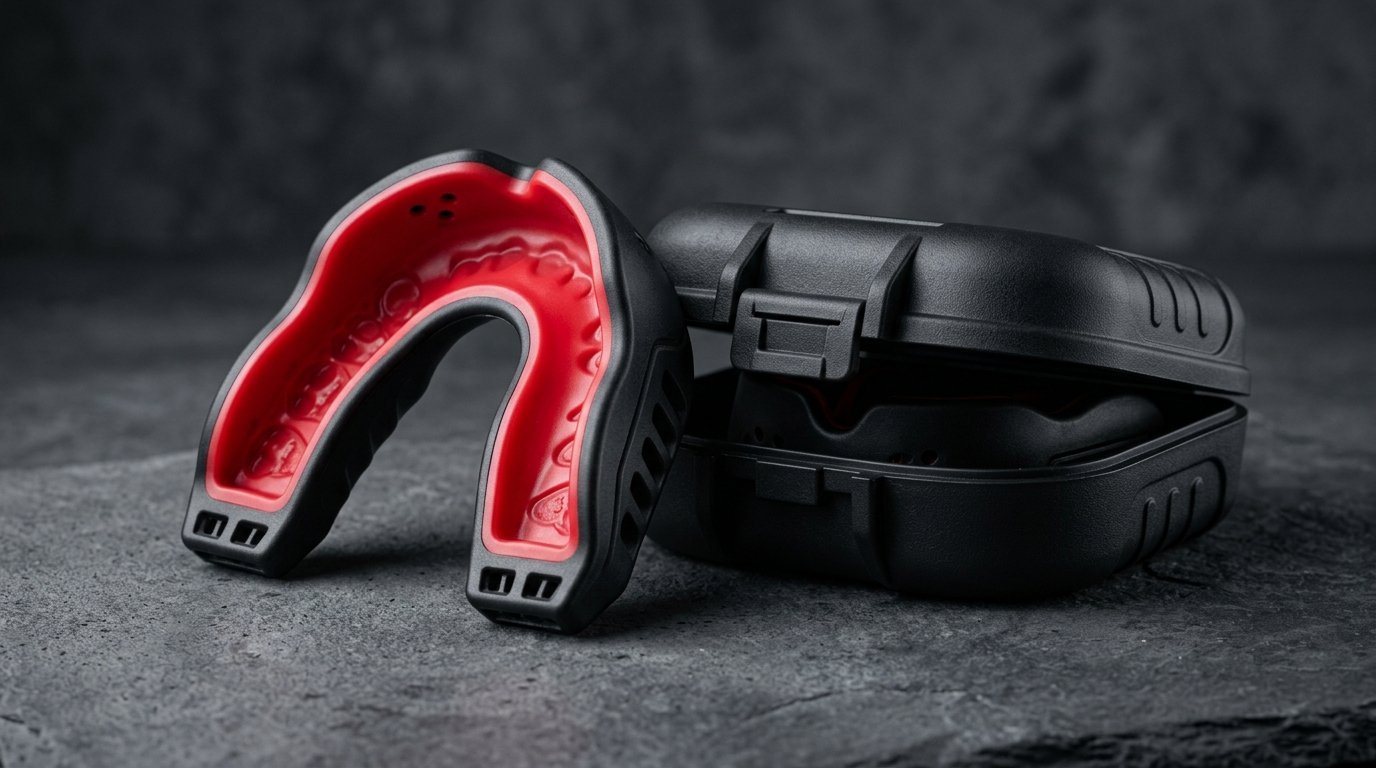
Why Mouthguards Are the Highest-Margin Product in Combat Sports
When sports equipment brand founders and martial arts academy owners map out their initial product catalogue, heavy leather gear almost always commands the spotlight. Boxing gloves, Thai shin guards, and heavy bags represent substantial ticket sizes and immediate brand prestige. Yet, experienced combat sports distributors and top-ranked Amazon sellers understand an unwritten rule of athletic retail: soft goods build visual identity, but precision protective consumables generate the highest sustained margins.
Among all protective combat accessories, dental mouthguards hold a uniquely profitable commercial profile. Unlike a 16oz sparring glove that weighs nearly a kilogram and incurs substantial dimensional air freight costs, a high-performance boil-and-bite mouthguard weighs under 35 grams. A standard master carton of 500 boxed mouthguards occupies less cargo volume than six pairs of headgear, fundamentally transforming landed shipping economics and allowing international brands to realize gross margins often exceeding 65% to 80% at retail.
Furthermore, mouthguards represent a strict consumable cycle. Dental associations and athletic commissions universally recommend replacing training mouthguards every 6 to 12 months due to polymer micro-fatigue, saliva enzyme degradation, and bite compaction. For gym pro-shops and private label fightwear labels, a high-grade custom mouthguard line provides continuous repeat revenue with minimal inventory holding footprint.
However, manufacturing an athlete-grade mouthguard requires far more engineering sophistication than merely stamping out colored plastic. A competitive combat sports mouthguard must satisfy rigorous medical safety standards, dissipate severe blunt-force jaw impacts to protect against concussive trauma, and deliver effortless breathing during championship rounds. This guide breaks down the complete manufacturing lifecycle—from thermoplastic polymer chemistry and dual-density multi-shot tooling to private label packaging and international compliance.
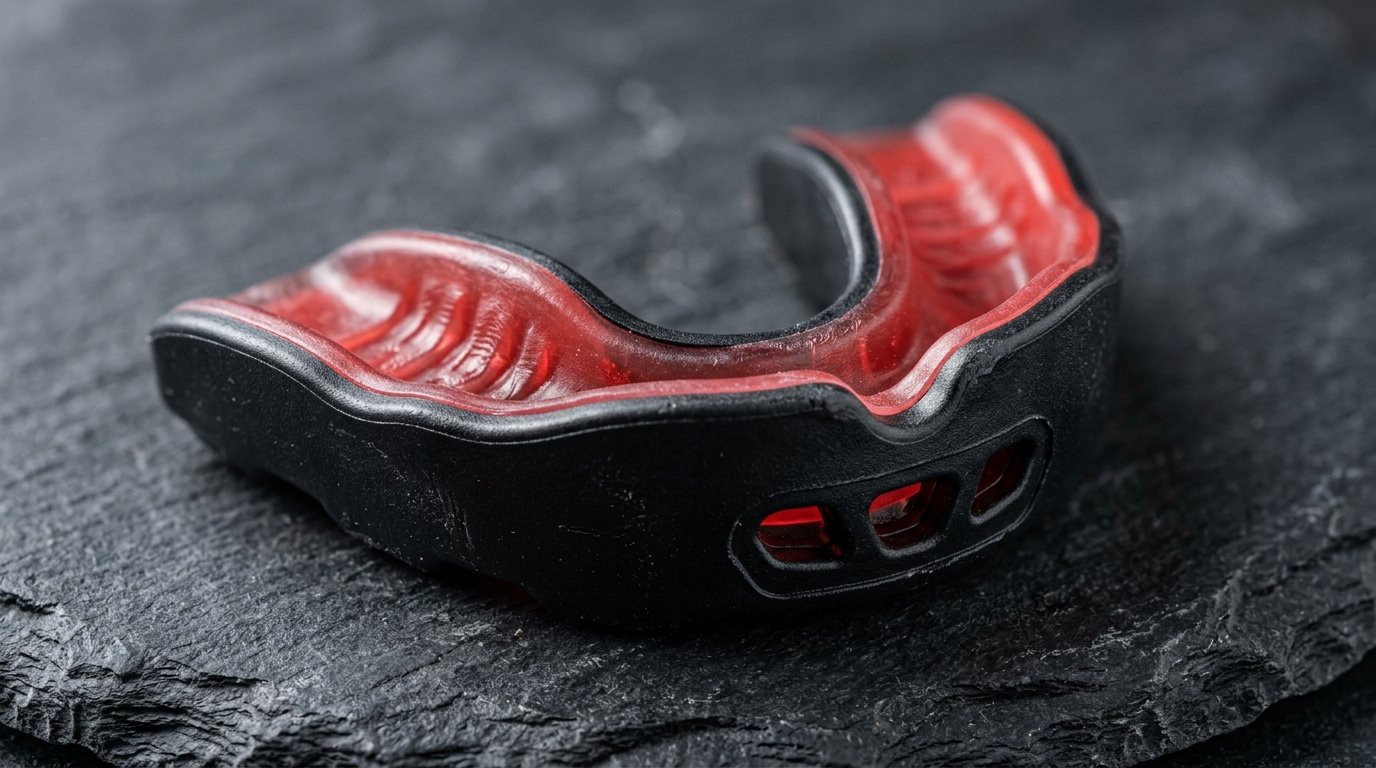
Anatomy & Architecture: Single Layer vs. Dual-Density vs. Tri-Layer
The global mouthguard market is divided into distinct technical tiers. Understanding these structural tiers enables brand developers to position their product lines correctly against budget discount brands and elite medical-grade competitors.
1. Monolithic Single-Layer EVA Guards (Entry Tier)
Single-layer mouthguards are manufactured from a uniform homogenous block of low-density Ethylene-Vinyl Acetate (EVA). These represent the entry-level market found in youth starter kits and mass-market discount chains. Because the entire unit consists of a single pliable polymer, it softens uniformly at 60°C to 70°C in warm water.
While inexpensive to tool and mold, single-layer mouthguards exhibit critical performance compromises in combat sports. Under hard bites during the thermoforming process, athletes frequently bite straight through the molar base, compressing the bottom layer to less than 1.0mm thickness. When subjected to direct hooks or uppercuts, thin single-layer guards lack the structural stiffness needed to prevent jaw displacement or dissipate peak g-force shocks away from the temporomandibular joint (TMJ).
2. Dual-Density Co-Molded Guards (The Industry Standard for Combat Sports)
Dual-density mouthguards represent the undisputed sweet spot for commercial combat sports brands, professional boxing promotions, and MMA gym gear lines. These guards utilize a dual-injection manufacturing process that fuses two distinct materials with complementary mechanical characteristics:
- Outer Impact Exoskeleton (High-Density Polymer): A semi-rigid structural frame engineered from medical-grade Thermoplastic Polyurethane (TPU) or high-Shore EVA. This outer wall acts as a ballistic shield, shielding the incisors from direct impact, preventing molar bite-through, and distributing focal impact energy across the dental arch.
- Inner Thermo-Gel Liner (Low-Temperature Moldable EVA): A supple, food-grade inner matrix that softens rapidly in boiling water. When molded, it conforms snugly around the crowns, interdental spaces, and gingival margins, creating a secure vacuum lock that stays firmly anchored even when the fighter opens their mouth to call out or breathe.
3. Tri-Layer Advanced Shock Guards (Elite Competition Tier)
Tri-layer mouthguards incorporate an additional middle shock-absorption membrane—often an elastomer honeycomb pad or dampening gel inserts situated directly under the molar impact strike pads. This third layer provides progressive deceleration, dampening high-velocity kinetic energy transfer before it can transmit to the base of the skull. Tri-layer designs require multi-cavity rotary tooling and tighter thermal controls, positioning them at the premium flagship tier of combat retail catalogues.
| Architecture | Material Combination | Impact Dispersion | Retention & Fit | Target Market |
|---|---|---|---|---|
| Single-Layer EVA | Standard EVA (65-75 Shore A) | Basic / Low | Moderate (loosens quickly) | Budget retail, youth sports |
| Dual-Density Co-Molded | Rigid TPU/EVA frame + Thermo-Gel | High (distributes focal force) | Excellent (tight custom lock) | Boxing, MMA, Muay Thai, BJJ |
| Tri-Layer Multi-Matrix | TPU shield + Dampening core + Gel | Maximum (multi-stage damping) | Elite / Anatomical contour | Pro fighters, premium brands |
Material Science & Polymer Engineering
Because mouthguards interact directly with oral mucosa, saliva enzymes, and dynamic dental bite forces, the raw materials selected must satisfy stringent biocompatibility and mechanical longevity standards. Sourcing uncertified commercial plastics exposes brands to severe product liability, chemical leaching risks, and regulatory bans across North America and Europe.
Polymer Selection Criteria
Professional OEM combat sports mouthguards rely on three core polymer families:
- Medical-Grade Ethylene-Vinyl Acetate (EVA): The gold standard for thermoformable boil-and-bite liners. The vinyl acetate percentage determines the softening temperature and elasticity. A 28% to 33% vinyl acetate ratio provides the ideal balance of moldability at safe water temperatures (75°C to 80°C) without burning oral tissues or shrinking excessively upon cooling.
- Thermoplastic Polyurethane (TPU): Used for outer impact chassis and molar bite plates. TPU delivers exceptional abrasion resistance, high tear strength, and stable structural rigidity under intense strike loads, protecting the softer inner EVA from chewing fatigue.
- Food-Grade Thermoplastic Elastomers (TPE): A modern alternative offering rubber-like elasticity with polymer processability. TPE provides superior silicone-like comfort against sensitive gums while maintaining complete recyclable processing credentials.
Shore Hardness Matrix for Impact Control
Hardness in polymer engineering is measured on the Shore Durometer scale. In an optimized combat sports mouthguard, different zones require distinct Shore A hardness ratings:
- Labial Wall (Front Teeth Shield): 85–90 Shore A. Requires high rigidity to deflect direct frontal blows and prevent tooth intrusion.
- Occlusal Plane (Molar Bite Channel): 70–80 Shore A. Provides firm bite resistance to prevent bottoming out under clenched jaw pressure.
- Lingual Flange & Gel Liner: 50–60 Shore A. Yields soft, pliable adaptation around inner teeth surfaces and gums to prevent abrasive ulceration during speech and heavy breathing.
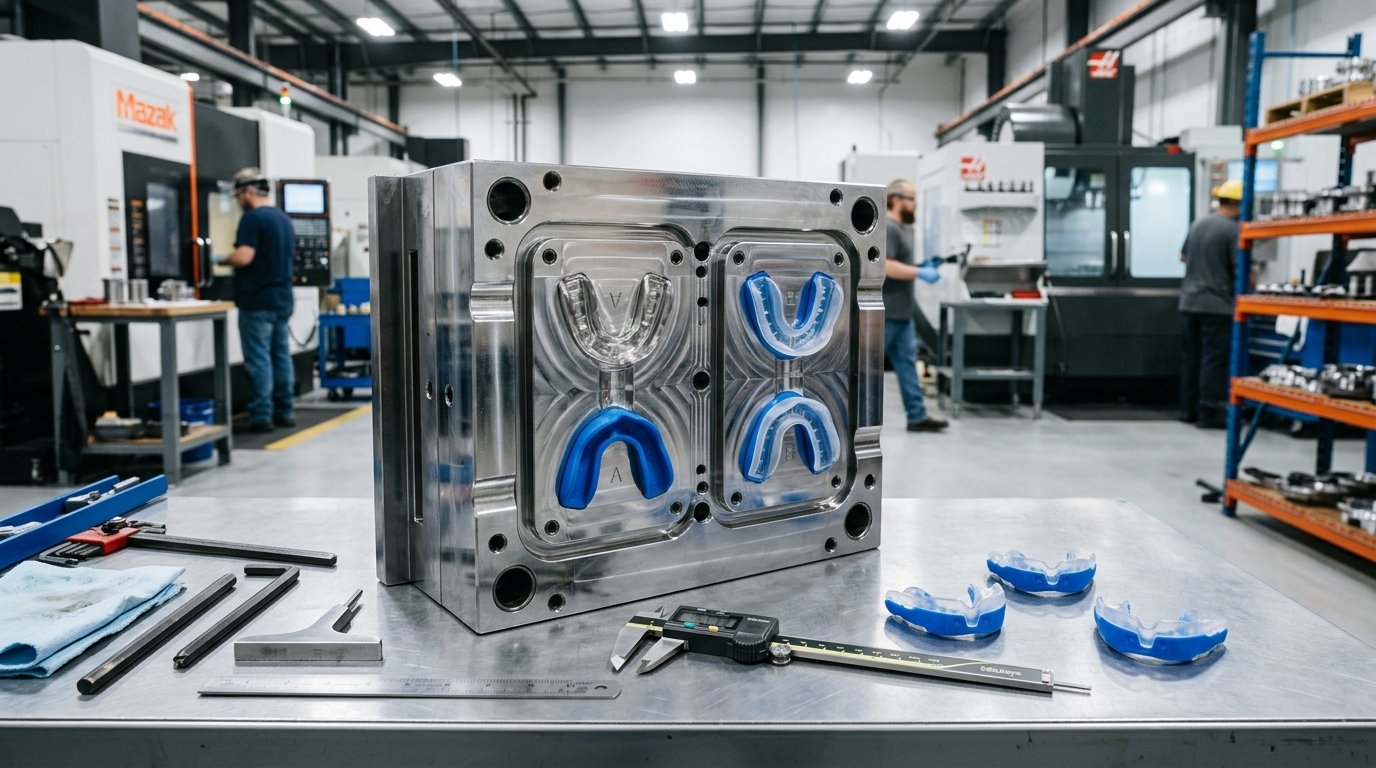
The Manufacturing Process: From Tooling to 2-Shot Injection Molding
Producing high-volume, defect-free mouthguards requires tight process discipline across mold tooling, temperature ramping, injection cycle times, and automated ejection. Here is how modern OEM combat sports mouthguards are engineered on the factory floor:
Step 1: 3D CAD Prototyping & Ergonomic Airway Modeling
Every custom mouthguard geometry begins as a high-resolution 3D parametric CAD model. Designers analyze dental arch anthropometry across adult and youth demographics to optimize molar width, palatal arch clearance, and incisor curvature. Crucially, engineers incorporate front and lateral breathing channels—under-bite vents that allow 20% to 35% greater oxygen intake when the athlete’s teeth are firmly locked together during sparring exchanges.
Step 2: Hardened Steel Mold Tooling Fabrication
Once digital prototypes are approved, multi-cavity injection molds are CNC-machined from hardened P20 or NAK80 tool steel. For dual-density guards, the tooling involves either a dual-stage rotary index mold or an over-molding robotic transfer setup. High-precision tooling is essential to prevent plastic flash (rough parting line burrs) that could irritate an athlete’s inner lip and gums.
Step 3: Two-Shot (2K) Co-Injection Molding
In the first injection cycle, the rigid exoskeleton chassis is injected at high pressure and controlled barrel temperature (190°C–210°C). In the secondary shot, the mold core rotates or transfers, and the softened thermo-gel liner resin is injected directly into the outer chassis channels at 150°C–170°C. The thermal energy of the second shot partially melts the contact surface of the first shot, achieving a flawless, permanent molecular bond without chemical adhesives.
Step 4: Robotic De-molding, Cooling & Micro-Trimming
Automated robotic arms remove the molded mouthguards from the cavity plates and place them on temperature-controlled cooling jigs to prevent shrinkage distortion. Operators visually inspect each unit under magnification to verify edge smoothness, ventilation port clarity, and layer symmetry.
Customization, Branding & Private Label Options
Building a recognizable protective brand requires clean, durable aesthetic customization. When branding mouthguards, manufacturers offer several specialized printing and coloring methodologies tailored to distinct budget tiers and volume thresholds:
1. Embedded Sandwich Foil Decals (Premium Durability)
In this high-end technique, the brand logo or graphic is printed on an ultra-thin polymer film and placed between the inner gel liner and an optical-grade clear outer shield during injection molding. Because the graphic is permanently encapsulated beneath the clear outer window, it never contacts saliva, teeth friction, or cleaning chemicals, ensuring the artwork remains razor-sharp for the lifetime of the mouthguard.
2. Medical-Grade Pad Printing (Versatile & Fast Turnaround)
Pad printing transfers non-toxic, certified biocompatible inks directly onto the exterior front face of the mouthguard chassis. This method is ideal for one-color or two-color brand insignias, competition sponsor logos, and gym crests. The cured ink resists warm water immersion during the boil-and-bite molding process.
3. Custom Dual-Tone Pantone Color Matching
Brand founders are not restricted to standard catalog colors. OEM manufacturing allows custom Pantone matching for both the outer chassis and the inner thermo-gel liner. Whether pairing a stealth matte black outer wall with an aggressive neon green gel, or matching an academy’s signature crimson and navy palette, custom color compounding establishes instant brand distinction.
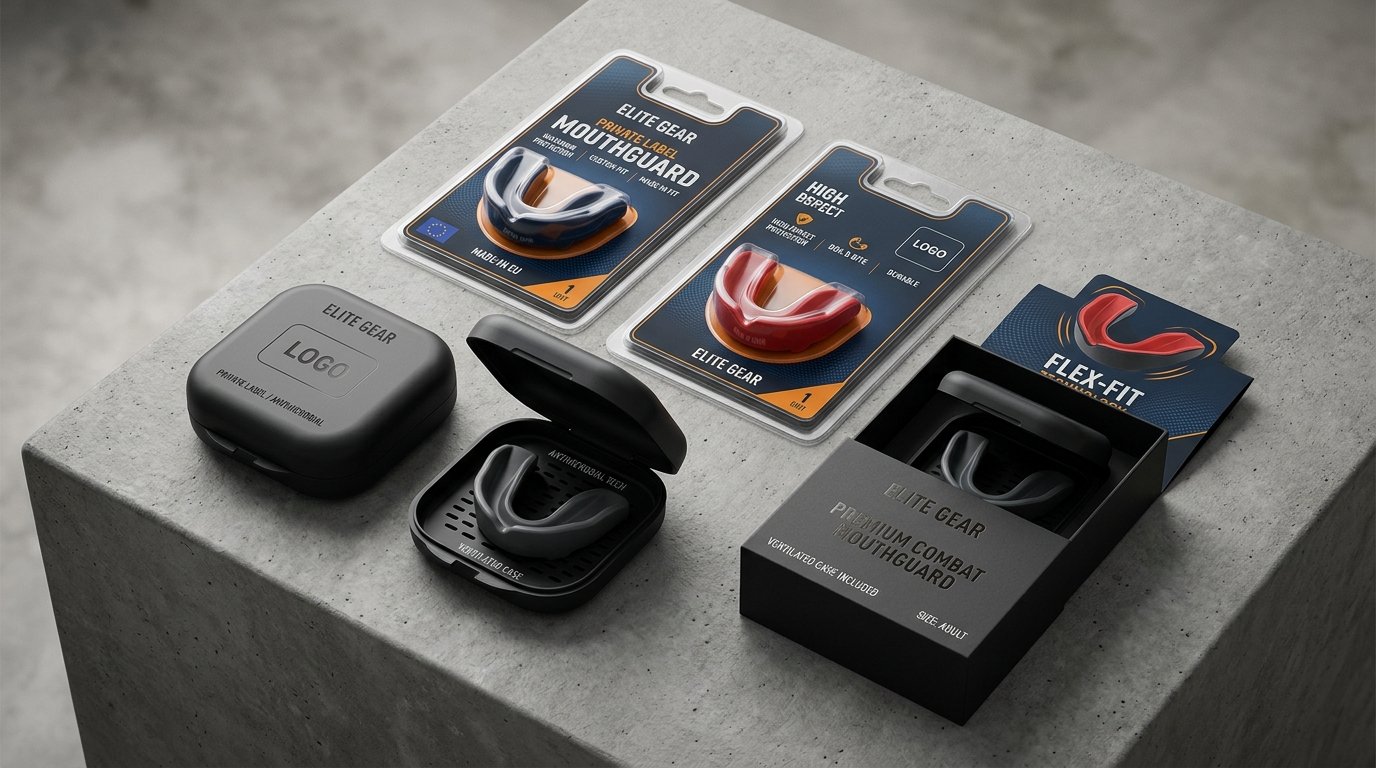
Packaging Architecture: The Key to Retail & E-Commerce Conversions
A mouthguard is only as appealing as the container that protects and presents it. Premium packaging transforms a $3 manufacturing unit into a $25 retail purchase while preventing physical contamination and transit damage.
1. Ventilated Antimicrobial Hard Cases
Every combat athlete needs a safe place to store their mouthguard in their gym bag. High-grade OEM storage cases are injection molded from impact-resistant polypropylene (PP) featuring precision snap-locks, integrated carabiner attachment loops, and engineered drainage/aeration vents that allow moisture to evaporate rapidly, preventing bacterial mold growth. Cases can be customized with silk-screened logos, embossed brand emblems, or soft-touch rubberized coatings.
2. Retail Blister Cards & Clamshell Packaging
For brick-and-mortar sports retail stores and Amazon FBA fulfilment, clear thermoformed blister clamshells with high-gloss Euro-hole hanging backer cards provide maximum product visibility while deterring in-store tampering. High-density printed cards display compliance marks, size specifications (Adult 12+ / Youth Under 11), and branded graphics.
3. Multilingual Thermoforming Fitting Instructions
Customer return rates on boil-and-bite mouthguards are almost entirely driven by improper boiling execution (e.g. overheating in boiling water for too long or not biting down firmly). Including clear, illustrated, step-by-step molding guides in English, Spanish, French, and German dramatically cuts customer inquiries and 1-star reviews for Amazon private label sellers.
Quality Assurance, Testing Protocols & International Compliance
Selling protective sports gear in major international markets requires compliance with strict safety directives. Importers and brand owners should verify that their manufacturing partner operates formal QA testing protocols at every stage:
Key Quality Control Benchmarks
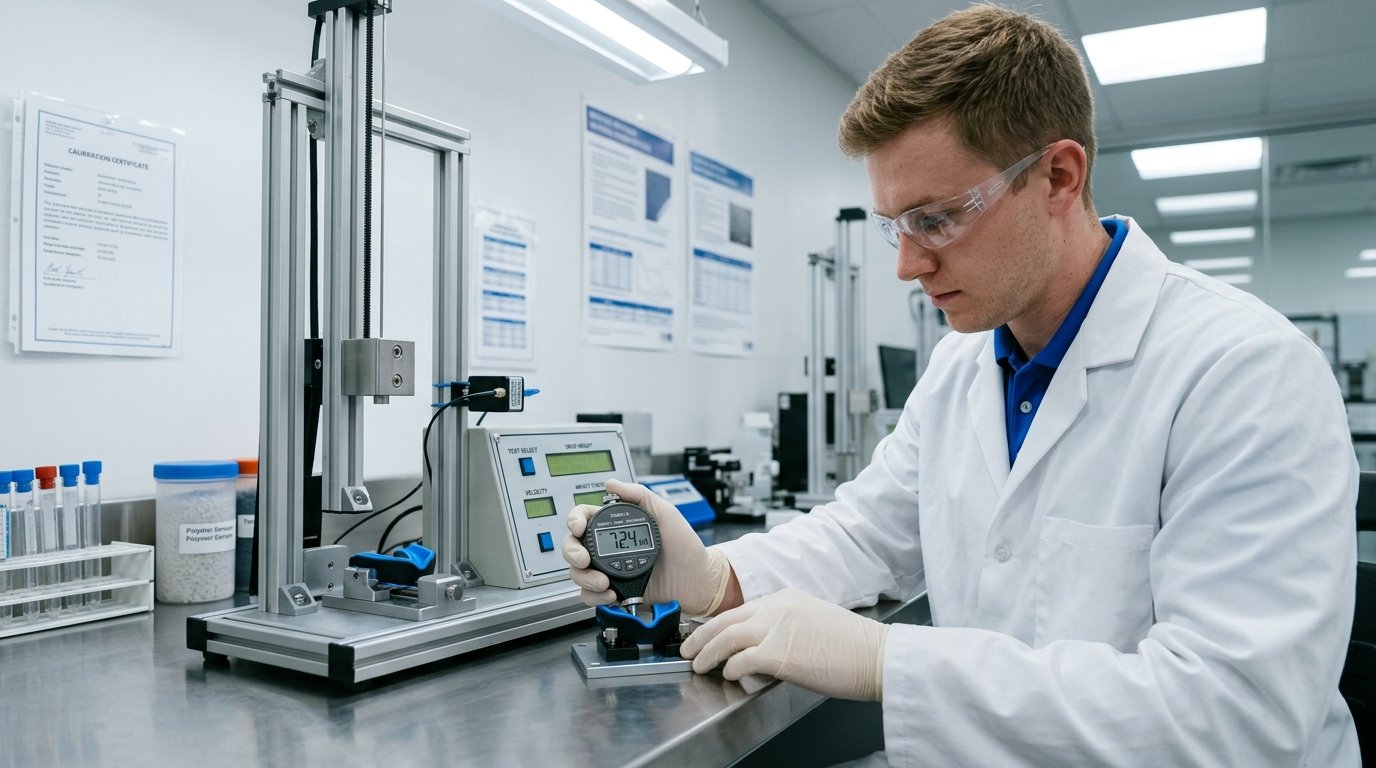
- Shore Hardness Consistency Test: Digital durometer measurements across the molar base and labial wall verify that polymer curing meets specified density targets (±2 Shore A tolerance).
- Thermal Deformation & Memory Retention Test: Sample units undergo standardized 80°C hot water immersion cycles followed by cold-set molding. The guard must demonstrate predictable softening without uncontrolled warping, wall collapse, or excessive thickness loss at the occlusal pad.
- Layer Adhesion & Peel Strength Test: Dual-density units are tested to verify that the outer structural chassis cannot be delaminated from the thermo-gel inner channel under mechanical shear loads exceeding 25 N/cm.
- Hinge & Snap-Lock Fatigue Testing: Carrying cases undergo 1,000+ cycle open/close stress tests to ensure the living hinge does not crack or fail in cold gym environments.
Regulatory Certifications for Global Export
To legally distribute mouthguards across Western markets, products must align with recognized standards:
| Standard / Regulation | Governing Region | Focus Area | Requirement for Brands |
|---|---|---|---|
| CE EN 9320 / PPE Cat. II | European Union / UK | Impact energy attenuation & retention | Mandatory CE mark for EU retail |
| FDA 21 CFR 177.1350 | United States | Food contact & oral biocompatibility | Mandatory resin non-toxicity audit |
| EU REACH (EC 1907/2006) | European Union | SVHC phthalate & plasticizer restriction | Phthalate-free chemical certification |
| CPSIA Section 101/108 | United States | Youth sports equipment lead & phthalates | Required for youth junior mouthguards |
B2B Sourcing Strategy: MOQs, Custom Tooling & Landed Cost Economics
When launching a mouthguard line, procurement managers face a strategic choice between two distinct sourcing pathways: Open-Mold Private Label vs. Custom-Tooled OEM Development.
Pathway A: Open-Mold Private Label (Fastest Time-to-Market & Lower Capital)
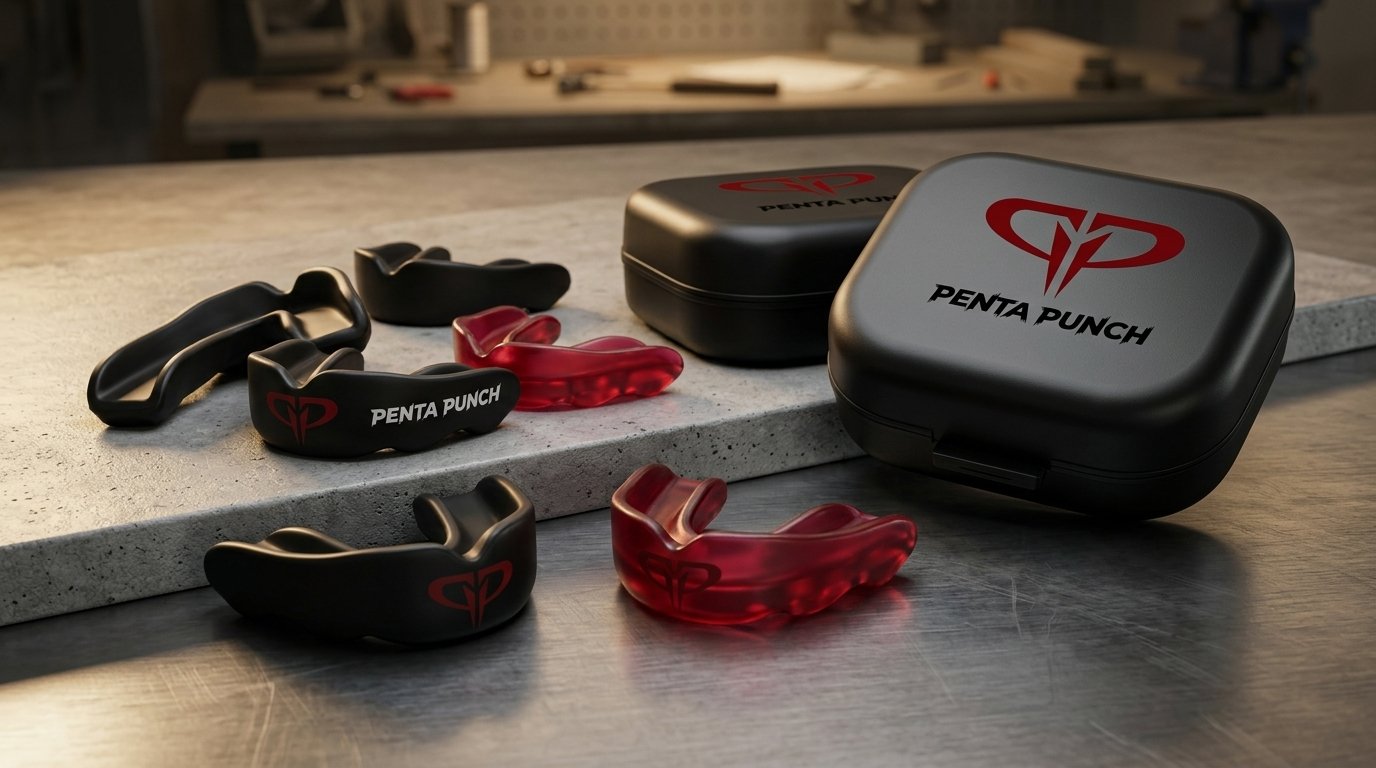
In the open-mold model, brands leverage Pentapunch’s existing, pre-tested dual-density and tri-layer mold chassis. You select your proprietary Pantone color combinations for the outer frame and inner gel, add custom pad-printed or foil logos, and configure fully branded storage cases and retail packaging cards.
- Tooling Cost: $0 (No initial steel mold investment).
- Minimum Order Quantity (MOQ): 300 to 500 units per colorway.
- Lead Time: 15 to 25 business days.
- Best For: Martial arts academy chains, startup combat apparel brands, and Amazon private label sellers seeking rapid market entry.
Pathway B: Custom-Tooled OEM Manufacturing (Exclusive Proprietary Shapes)
For established fight equipment brands seeking a patented proprietary chassis geometry—such as unique airflow fin profiles, specialized molar grip textures, or distinct aesthetic facets—Pentapunch delivers full turnkey custom mold engineering from 3D CAD to hardened tool steel cavity blocks.
- Tooling Cost: Approximately $1,800 to $3,500 (one-time investment for 2-shot production molds).
- Minimum Order Quantity (MOQ): 2,000 to 5,000 units (allowing full mold cavity optimization).
- Lead Time: 30 to 45 days for mold cutting and initial sample verification, followed by 20 days for batch production.
- Best For: Global equipment brands, sanctioned fight leagues, and high-volume retail distributors demanding absolute intellectual property exclusivity.
Frequently Asked Questions (FAQ)
QWhat is the ideal thickness for a combat sports mouthguard?
For boxing, MMA, and Muay Thai, the finished occlusal (molar) bite pad should measure between 3.5mm and 4.5mm, with the front labial shield measuring approximately 4.0mm to 5.0mm. This provides adequate impact deceleration without creating excessive bulk that obstructs speech or restricted breathing.
QAre custom mouthguard logos safe from saliva wear and tear?
Yes. When using embedded sandwich foil decals, the logo graphic is encapsulated beneath an optical-grade clear polymer outer layer during injection molding. The print never comes into contact with saliva, teeth friction, or warm water during fitting, ensuring the logo remains permanent.
QWhat is the minimum order quantity (MOQ) for private label mouthguards?
For open-mold private label orders utilizing custom Pantone colors, custom case logos, and retail blister cards, the standard MOQ is 500 units. For full custom-tooled proprietary OEM mold geometries, MOQs start at 2,000 to 5,000 units to amortize precision steel tooling costs.
QHow do mouthguards compare in shipping logistics to boxing gloves?
Mouthguards offer dramatic shipping cost advantages. A master carton of 500 mouthguards with cases weighs under 25kg and occupies roughly 0.08 CBM. In contrast, 500 pairs of 16oz boxing gloves require over 2.5 CBM of freight volume, making mouthguards an exceptionally high-margin addition to international container shipments.
Build Your Custom Protective Gear Line with Pentapunch
Whether you need turnkey private label boil-and-bite mouthguards with custom branded ventilated cases or complete proprietary 2-shot injection mold tooling, Pentapunch delivers factory-direct engineering, certified medical-grade polymers, and low-MOQ flexibility from Sialkot, Pakistan.