Blog
Private Label to Owned Brand: A Growth Roadmap for Combat Sports Startups

Most combat sports start-ups begin the same way: source a decent pair of gloves, put a logo on them, list them on Amazon or a Shopify store, and start selling. That’s private labelling, and it works. It gets a product to market fast, with low risk and low capital.
The problem is what happens next or doesn’t. A large share of private label sellers in this space stay exactly where they started for years. They keep reordering the same gloves, tweaking the logo placement, and competing mostly on price. Meanwhile, a smaller group of sellers use private labelling as a first stage, not a final destination, and build something that looks and behaves like an actual brand.
This article lays out the realistic stages between the two, what changes operationally and financially at each step, and where most founders get stuck.
Why So Many Private Label Sellers Never Become Brands
Private label success creates its own trap. Once a product is selling and margins look healthy, there’s little pressure to change anything. The founder is busy fulfilling orders, managing reviews, and running ads not thinking about brand architecture.
The sellers who do progress usually hit one of three triggers: margin compression from competitors selling near-identical products, a plateau in growth that ads alone can’t fix, or a direct request from a retailer or gym chain for something more differentiated than a logo swap. Recognizing these triggers early makes the transition smoother than waiting until they force your hand.
Stage 1: Reselling — Where Every Start-up Begins
At this stage, you’re selecting from a manufacturer’s existing catalogue and applying your logo. There’s no product development, no material selection input, and minimal customization beyond colourway and branding.
This stage is appropriate when:
- You’re validating demand before committing capital
- You want to test a market (a specific country, gym niche, or sport) cheaply
- You don’t yet have the data to know what product differentiation your customers actually want
The risk of staying here too long is that you’re building customer relationships around a product anyone else could sell tomorrow. Your brand equity is close to zero — customers are loyal to the price and the marketing, not the product.
Stage 2: Private Label — Building Product-Level Ownership

Choosing materials is where private label ownership begins
This is where most sellers who invoked this article already are. Private labelling adds a layer of control: you’re choosing materials, padding density, stitching style, or colourways, even if the base construction and pattern come from the manufacturer’s existing moulds and templates.
The meaningful shift here is moving from “which product do I pick” to “what should this product be.” That requires:
- A sampling process with real feedback loops (see our sampling process guide for what this actually involves)
- Enough sales data to know which product attributes matter to your specific customers
- A manufacturing partner willing to accommodate customization at your order volume
Private label is where most founders should stay until they have clear evidence — reviews, repeat purchase data, retailer feedback — pointing to specific product gaps only a custom design can close.
Stage 3: Brand Differentiation — Moving Beyond the Product
This stage is often skipped or done poorly. Brand differentiation isn’t a new logo or packaging refresh — it’s building a defensible reason customers choose you specifically, beyond price and convenience.

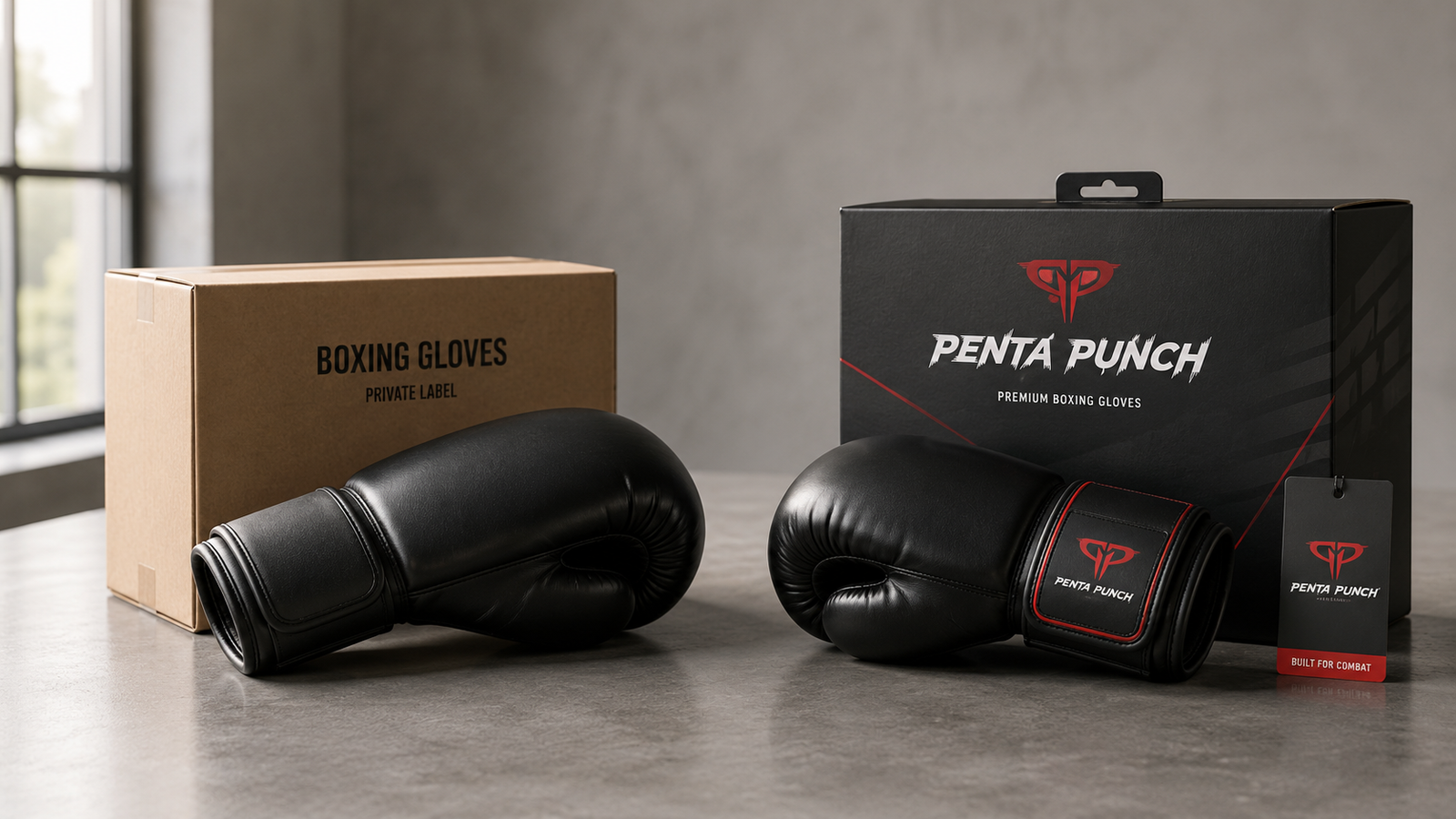
Cohesive packaging signals brand differentiation, not just product ownership
Concretely, this stage includes:
- A defined product line logic (not just “gloves” but a coherent set of products that make sense together for your target customer)
- Packaging and unboxing designed around your brand, not generic private label boxes
- Content and positioning that explain why your product exists, not just that it does
- A returning-customer strategy: warranty language, community building, or a loyalty structure
This is also usually when ODM (Original Design Manufacturing) conversations start, where you’re contributing actual design input rather than selecting from existing options. It’s a meaningfully bigger commitment — in time, in minimum order quantities, and in upfront cost — so it should be backed by real demand signals, not ambition alone.
Stage 4: Owned Brand — Building Equity That Outlasts Any Single SKU

Owned brand status means shaping the product line, not just selecting from one
An owned brand has value independent of any single product. If you stopped selling gloves tomorrow and launched rash guards instead, would customers follow you? That’s the test.
At this stage, the business typically has:
- Original tooling, patterns, or designs the manufacturer produces exclusively for you
- A recognizable visual identity applied consistently across product lines
- Direct relationships with gyms, academies, or retailers built on brand reputation, not just product specs
- Pricing power — the ability to charge above commodity private label pricing because customers are buying the brand, not just the item
Reaching this stage doesn’t mean abandoning your manufacturer relationship if anything, it deepens it. OEM and ODM partnerships at this level involve closer collaboration on tooling, exclusivity agreements, and longer-term production planning.
The Signals That Tell You It’s Time to Move to the Next Stage
Rather than following a fixed timeline, watch for these indicators:
| Signal | What It Suggests |
|---|---|
| Repeat customers citing specific product features | Ready for private label customization |
| Competitors undercutting your identical product on price | Time to differentiate, not just reprice |
| Retailers asking “what else do you make” | Signal to build a coherent product line |
| Customers describing your brand’s “feel” or values in reviews | Brand equity is forming — invest in it deliberately |
| Growth plateauing despite increased ad spend | Product is likely undifferentiated; marketing alone won’t fix it |
Common Mistakes That Stall the Transition
Moving too fast on customization before validating demand. Committing to custom tooling based on assumptions rather than sales data usually means paying for differentiation nobody asked for.
Treating branding as design only. A new logo or colour palette doesn’t create brand equity if the underlying product and customer experience haven’t changed.
Underestimating MOQ and lead time changes. Custom development typically involves higher minimum order quantities and longer production timelines than catalogue selection. Cash flow planning needs to account for this before committing.
Trying to serve every stage’s customer at once. A brand built around premium positioning and one built around budget private label pricing attract different customers. Trying to hold both often confuses the market.
Working With Your Manufacturer Through Each Stage
A manufacturer that only offers catalogue private labelling will limit how far you can go. Before committing to a long-term partner, it’s worth confirming they can support:
- Sampling and iteration, not just bulk production of existing designs
- Material and construction flexibility as your product requirements evolve
- Realistic MOQ scaling as you move from private label toward custom ODM work
- Transparent communication on lead times, since customization stages typically extend production timelines
This is also where factory-direct relationships matter more than sourcing through a middleman — every added layer between you and production reduces your ability to iterate quickly as your brand develops.
A Practical Timeline: What Realistic Growth Looks Like
There’s no fixed schedule, but a common pattern for start-ups that make this transition successfully looks like:
- Months 1–6: Reselling or basic private labelling, focused on validating demand and gathering customer feedback
- Months 6–18: Private label customization based on accumulated sales and review data
- Year 2 onward: Brand differentiation work begins once specific demand signals justify the investment
- Year 2–3+: Owned brand status, typically after multiple product lines and a recognizable customer base are established
Start-ups that try to compress this timeline without the underlying data usually end up with expensive inventory nobody specifically wanted.
FAQ
Is private labelling a permanent business model, or should every start-up aim for an owned brand?
Private labeling can be a sustainable end state for some businesses, particularly those competing primarily on price and distribution efficiency. It only becomes limiting if your business model depends on premium positioning or customer loyalty that a commodity product can’t support.
How much more does ODM development cost compared to private label?
Costs vary by product complexity, but ODM development typically involves tooling or pattern costs, higher MOQs, and longer sampling cycles than selecting from an existing catalog. It’s worth requesting a comparative quote before committing.
Can I move to brand differentiation without changing manufacturers?
Often yes, provided your current manufacturer supports customization and sampling. Switching manufacturers mid-transition adds risk and delay, so it’s worth evaluating your current partner’s capabilities first.
What’s the biggest sign that a private label product is ready to become brand-specific?
Consistent, specific customer feedback about the same product attribute — sizing, padding feel, durability — is a stronger signal than general sales growth. It tells you exactly what a custom version should solve.
Do I need a large product catalogue before building an owned brand?
No. Some of the most defensible combat sports brands started with a single well-differentiated product and expanded deliberately, rather than launching wide and shallow.
Interested in moving from private label to a fully custom ODM product line? Contact Penta punch at info@pentapunch.com or WhatsApp +923217660939.