Blog
Boxing Gloves vs MMA Gloves vs Muay Thai Gloves: Manufacturing Differences Private Label Brands Should Know

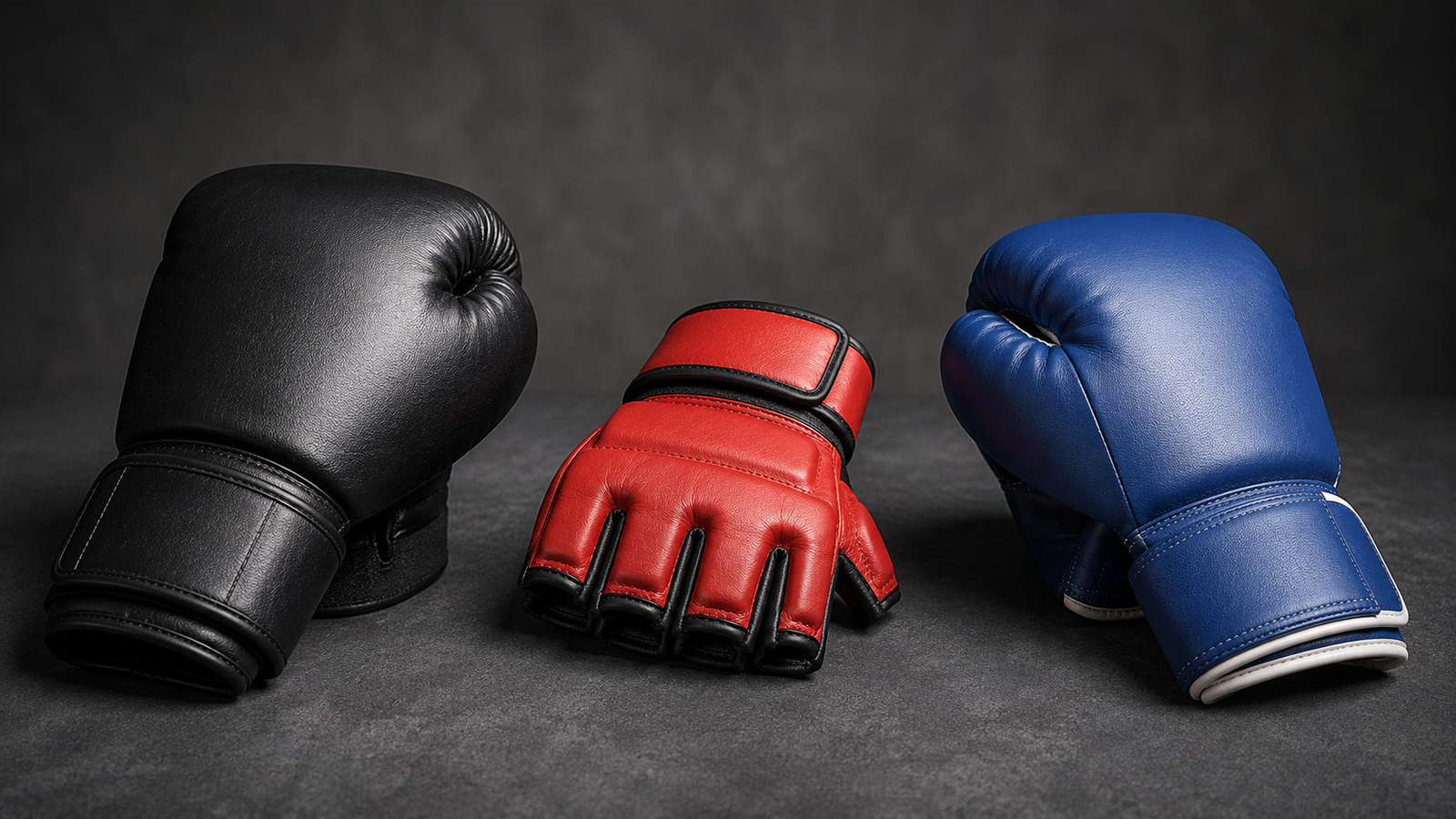
Most private label brands enter the combat sports category through boxing gloves, then expand into MMA or Muay Thai lines once the first product is selling. That’s a reasonable growth path. The mistake happens when a brand assumes the manufacturing playbook carries over unchanged same padding spec, same materials, same construction, just a different name on the label.
It doesn’t work that way. Boxing, MMA and Muay Thai gloves solve different problems for the athlete, and the manufacturing choices reflect that.
Padding is distributed differently. Finger structure changes. Even the leather grade a factory recommends can shift depending on which discipline the glove is built for. If you’re planning a multi-category product line, understanding these differences before you brief your manufacturer will save you a failed first sample run and a costly one, since padding and mold changes usually mean a new production setup.
This guide breaks down the real construction differences between the three glove types, why they exist and what to ask your manufacturer before you commit to a multi-category order.
Why These Glove Types Are Built Differently
Each discipline has a different relationship between the hand and the target. Boxing is closed-fist striking against a heavy bag, focus mitts or an opponent’s guard, with the glove itself acting as a shock absorber for the puncher as much as protection for whoever’s on the receiving end. MMA involves striking, but also grappling, clinching, and grip exchanges, so the glove has to allow the hand to function almost normally. Muay Thai sits between the two closed-fist striking plus elbows, knees, and clinch work, with rounds that run longer and gloves that need to hold their shape under repeated, sustained impact.
A factory that understands this builds toward the discipline, not just the general shape of “a combat sports glove.” That’s the difference between a manufacturer copying a competitor’s spec sheet and one that actually understands the product.
Boxing Gloves: What the Construction Prioritizes
Boxing gloves are built almost entirely around impact absorption and wrist protection during closed-fist punching. The priorities:
- Maximum padding volume, usually multi-layer foam concentrated across the knuckle area, since the fist stays closed for the entire strike
- No finger separation fingers are grouped together inside a single mitt-like compartment, since boxing never requires individual finger movement
- Reinforced wrist support, often a wide hook-and-loop strap or lace closure, because heavier bag and sparring gloves (14oz–18oz) put real strain on the wrist joint
- Thumb attached and stabilized, usually stitched to the glove body, to prevent thumb injuries during clinch exchanges or bad-angle punches
Boxing gloves are sized by weight (8oz training gloves up to 18oz–20oz sparring and bag gloves), and the weight class determines foam density, not just outer size. A private label brand ordering both training and sparring weights should expect the factory to adjust internal foam layering per weight, not just add outer padding.
MMA Gloves: What the Construction Prioritizes
MMA gloves have the opposite problem: they need to protect the hand during striking while still allowing full hand function for grappling. This changes almost everything about the build:
- Open-finger design or minimal finger padding, since the hand needs to grip, wrap around a limb, and posture during ground exchanges
- Reduced padding volume across the knuckle compared to boxing gloves — protection is concentrated but thinner, since bulk padding interferes with grip
- Reinforced palm and finger-base stitching, because grappling puts repeated stress on seams that boxing gloves never experience
- Shorter wrist wrap or a compact hook-and-loop closure, since MMA gloves need to stay tight through takedowns without restricting wrist mobility
Material selection matters more here than in boxing. MMA gloves see more direct skin contact through open fingers, so factories often recommend microfiber or treated synthetic leather over raw genuine leather for hygiene and easier cleaning, particularly for gym-use product lines.
Muay Thai Gloves: What the Construction Prioritizes
Muay Thai gloves look close to boxing gloves at first glance, but the construction reflects the sport’s longer rounds and clinch-heavy exchanges:
- Softer, more flexible padding compared to boxing, since Muay Thai athletes throw more volume over longer rounds and need less fatigue in the forearm from a stiff glove
- Wider wrist wrap, often longer than a boxing glove’s strap, because clinch work puts lateral stress on the wrist that straight punching doesn’t
- A slightly curved fist shape in many designs, built for the clinch and knee-defense positions common in Muay Thai
- Thumb positioning tends to sit slightly lower and more mobile than boxing gloves, supporting the grip changes used in clinch fighting
Padding density in Muay Thai gloves is often engineered to feel firm on impact but flexible in the hand — a balance that’s harder to get right in a mold than either boxing’s straightforward density-for-protection approach or MMA’s minimal-padding approach.
Side-by-Side Manufacturing Comparison
Padding and Foam Differences That Actually Matter
“High-density foam” gets used as a marketing phrase across the industry, but density alone doesn’t tell you how a glove performs. Two things matter more:
Layering. A single thick foam block feels stiff and transfers more shock back into the hand. Multi-layer padding — typically a firmer outer layer over a softer inner layer — absorbs impact progressively and is standard in quality boxing and Muay Thai gloves.
Distribution. Where the padding sits matters as much as how much there is. Boxing gloves concentrate padding across the full knuckle line and the outer edge of the fist. MMA gloves concentrate what padding exists specifically over the knuckles, leaving the rest of the hand thin by design. Getting this distribution wrong — using a boxing padding map on an MMA glove mold, for instance — produces a glove that’s either too bulky to grip with or too thin to protect the hand.
If a manufacturer can’t explain their padding layering and distribution approach for each glove type separately, that’s worth treating as a signal during vetting, not just a detail to skip past.

Padding distribution changes based on the glove’s intended function
Finger Structure, Wrist Support, and Closures
Finger structure is the single clearest visual difference between the categories, but wrist support is where private label brands run into the most costly mistakes.
A boxing glove’s wrist strap is built to lock the wrist in a fixed position through repeated straight-line impact. An MMA glove’s wrist wrap is built to stay secure through twisting and grip changes without restricting rotation. A Muay Thai glove’s wrap is often the widest of the three, because clinch exchanges put lateral load on the wrist that neither boxing nor MMA gloves are designed to handle.
Brands sourcing a private label line across categories sometimes ask the factory to standardize the closure system to simplify production. This works for keeping a consistent brand look, but it should never come at the cost of category-specific wrist support — the closure width and strap tension need to stay matched to the sport.

Wrist wrap width and tension vary significantly by discipline
Material Choices by Glove Type
Material selection isn’t just about cost or premium positioning. Different glove types put different demands on the outer material:
- Genuine leather performs well on boxing and Muay Thai gloves, where the outer surface takes repeated direct impact against bags, mitts, and pads. Leather’s durability under sustained abrasion is its main advantage here.
- PU leather is a reasonable mid-tier choice across all three categories, offering a leather-like finish at a lower cost, with acceptable durability for gym-use and training-line products.
- Microfiber is increasingly common in MMA gloves specifically, since it handles the more frequent hand-to-hand and hand-to-mat contact in grappling with better grip and easier cleaning than genuine leather.
A brand building a private label line across categories should expect and ask for different material recommendations per glove type, rather than a single material applied uniformly for brand consistency.

Material choice depends on the glove’s intended use, not just cost
What This Means for Your Private Label Product Line
If you’re planning to launch boxing, MMA, and Muay Thai gloves under one private label brand, a few practical implications follow directly from the manufacturing differences above:
- Expect separate molds and specs per category. A single “glove spec sheet” covering all three product lines is a warning sign, not an efficiency.
- Sampling takes longer for a multi-category launch, since each glove type needs its own sample and approval round rather than one universal sample standing in for the whole line.
- MOQs are usually calculated per glove type, not combined across categories, so a three-category launch typically means meeting three separate minimums unless your manufacturer offers a combined-order arrangement.
- Branding elements — logos, labels, packaging — can stay consistent across categories even when the internal construction differs, which is the right place to standardize for brand identity.
- Material sourcing timelines can differ if one category uses microfiber and another uses genuine leather, since lead times vary by material availability.
Common Sourcing Mistakes Brands Make Across Categories
⚠ Assuming one factory relationship covers all three categories equally well. Many Sialkot manufacturers are strong across all combat sports gloves, but it’s still worth asking directly about a factory’s specific experience with MMA construction if boxing is their more visible specialty, or vice versa.
⚠ Ordering MMA gloves with a boxing padding density. This produces a glove that looks correct but grips poorly and doesn’t perform the way an MMA athlete expects, leading to returns and reputation damage in a category where user reviews are largely written by practicing athletes.
⚠ Underestimating wrist support differences. A Muay Thai glove built with a boxing-width wrist wrap will feel undersupported to a clinch-trained athlete, even if every other spec matches.
⚠ Treating “genuine leather” as automatically the right choice for every category. It’s the right call for boxing and Muay Thai in most cases. For MMA, it’s worth discussing microfiber or treated synthetic as the primary recommendation, not leather by default.
Questions to Ask Your Manufacturer Before a Multi-Category Order
- Do you build separate padding maps for boxing, MMA, and Muay Thai gloves, or use one base design across categories?
- What material do you recommend for each glove type, and why?
- Will each category require its own sample and approval round?
- How are MOQs calculated across a multi-category order combined or separate per glove type?
- Can branding and packaging stay consistent across categories even where internal construction differs?
- What’s your factory’s specific production experience with MMA gloves compared to boxing gloves?
Getting clear answers to these questions before your first purchase order protects both your budget and your product’s reputation with the athletes who’ll actually use it.
Conclusion
Boxing, MMA, and Muay Thai gloves share a category on a product catalog, but they’re solving different problems for the athlete wearing them, and a factory that understands this will build each one differently — not just resize the same mold. For a private label brand planning to launch across multiple combat sports categories, that distinction is worth understanding before the first sample order goes out, not after a return rate reveals it.
Planning a multi-category glove line? Get manufacturing guidance specific to boxing, MMA or Muay Thai construction from Pentapunch’s Sialkot factory.
info@pentapunch.com | WhatsApp +92 321 7660939
Frequently Asked Questions
Can one glove mold be adjusted to work for boxing, MMA, and Muay Thai?
No. Finger structure alone closed for boxing and Muay Thai, open for MMA requires a different mold. Padding maps and wrist wrap width also differ by category, so each glove type needs its own construction, even if outer branding stays consistent.
Is genuine leather always the best material for combat sports gloves?
Not universally. It performs well for boxing and Muay Thai gloves, where sustained bag and pad impact rewards leather’s durability. For MMA gloves, microfiber or treated synthetic leather is often the better fit due to more frequent hand-to-hand and grip contact.
Why do MMA gloves have so much less padding than boxing gloves?
MMA gloves need to preserve grip and hand function for grappling exchanges. Heavy padding across the palm and fingers would make gripping and clinching impossible, so padding is concentrated narrowly over the knuckles instead.
Do private label brands need separate MOQs for each glove type?
Usually yes. MOQs are typically calculated per glove type and per color or size combination, not combined across a multi-category order, unless a manufacturer specifically offers a combined-order arrangement.
What’s the biggest manufacturing mistake brands make when launching multiple glove categories?
Applying one glove type’s padding density or wrist support specification to another category most commonly, using boxing glove padding logic on an MMA glove which produces a product that doesn’t perform the way athletes in that discipline expect.