Blog
Boxing Gloves MOQ Explained: Why It Varies by Product, Material, and Customization

Ask five boxing glove manufacturers in Sialkot for their MOQ and you’ll get five different numbers 30 pairs, 50 pairs, 100 pairs, 300 pairs. None of them are lying. They’re just answering a more complicated question with a single figure, and that’s where most private label buyers get confused.
MOQ isn’t a fixed number a factory picks out of habit. It’s the outcome of several variables working together the product, the material, the customization level, and how many colors and sizes you want.
A supplier quoting “30 pairs” for a basic bag glove and “300 pairs” for a fully custom competition glove isn’t being inconsistent they’re pricing two very different production jobs. This guide breaks down what actually drives MOQ in boxing glove manufacturing, so you can plan your first order with realistic expectations instead of guessing based on a homepage FAQ.
What Does MOQ Actually Mean in Boxing Glove Manufacturing?
MOQ is the smallest quantity a factory will produce in a single run for a given specification. That last part “for a given specification” is where most confusion starts.
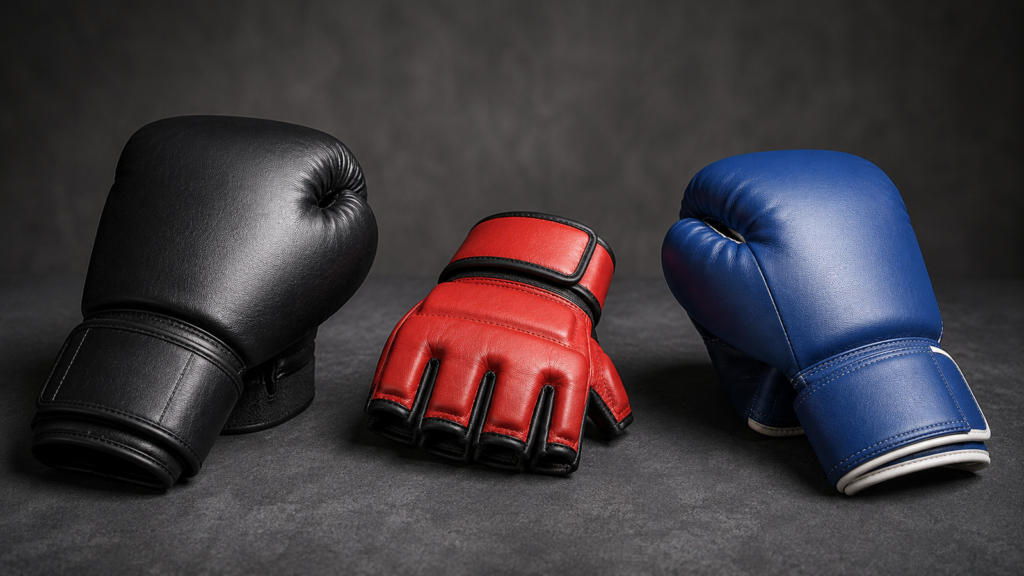
A specification isn’t just “boxing gloves.” It’s a specific product (sparring glove, bag glove, competition glove), in a specific material (genuine leather, PU, microfiber), in a specific color, in a specific size. Change any one of those variables and you’re technically asking for a new production run, which is why MOQ is almost always quoted per color and size combination, not per total order.
Key point: a buyer who wants 200 gloves split across four colors and three sizes isn’t placing one 200-unit order in the factory’s eyes. Depending on how the split works out, they may be asking for several smaller runs, each of which needs to individually clear the MOQ threshold.
Why MOQ Numbers Range So Widely Across Suppliers
Several variables combine to produce the MOQ a factory quotes. Understanding each one helps explain why one supplier’s number looks nothing like another’s for what seems like the same product.
- Product complexity. A basic bag glove with a single foam layer is faster to set up than a competition-grade glove with multi-layer padding and reinforced thumb attachment. Lower complexity generally means a lower MOQ.
- Material choice. Genuine leather requires cutting from hide, which involves more waste management and skilled labor than PU or synthetic leather. Factories often set a higher MOQ on leather gloves because sourcing and cutting are batch-dependent.
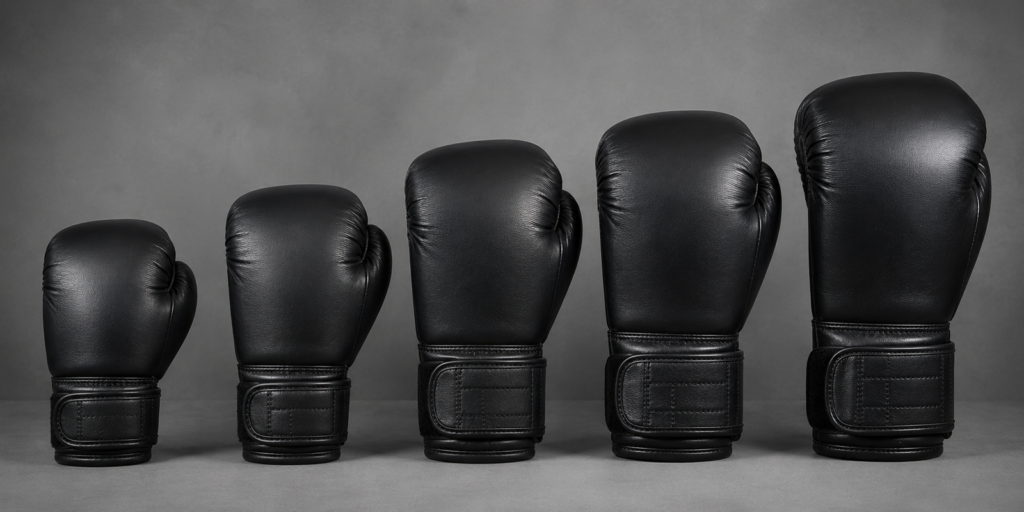
- Number of colors and sizes. If a factory’s stated MOQ is “50 pairs,” that typically means 50 pairs per color, per size — not 50 pairs total across your whole order.
- Customization level. Semi-custom (logo and color applied to an existing pattern) keeps MOQ lower. Full-custom (new pattern, new padding construction) requires new molds or dies, which raises the MOQ to justify that setup work.
- Packaging and branding requirements. Custom boxes, hangtags, and printed labels carry their own minimums, separate from the gloves themselves.

Genuine leather construction requires more setup work, which affects MOQ.
Typical MOQ Ranges by Boxing Glove Type
These ranges reflect common industry patterns rather than fixed rules — always confirm directly with your manufacturer, since every factory sets its own thresholds based on capacity and current production schedule.
How MOQ Is Calculated Per Color and Size Combination
Here’s a scenario that trips up a lot of first-time buyers. Say a factory quotes an MOQ of 50 pairs. A new brand wants to launch with three colorways and three sizes, assuming they need 50 pairs total to get started.
In practice, most factories read that quote as 50 pairs per combination. Three colors times three sizes is nine combinations meaning the buyer would need to either commit to 450 pairs total or reduce the number of combinations to fit their budget and demand forecast.
“Is this MOQ per SKU or can it be pooled across colors and sizes?” the one question every first-time buyer should ask before finalizing a quote, not after. Some factories allow pooling; others require each combination to independently clear the threshold. There’s no universal standard, so this is worth confirming directly.
Semi-Custom vs. Full-Custom: Which MOQ Path Fits Your Brand?
If you’re launching a private label brand for the first time, semi-custom production is usually the more practical starting point. You’re working within a pattern the factory already knows how to produce reliably, which keeps both MOQ and lead time lower while you test market demand.
Full-custom makes more sense once you have sales data, a defined product-market fit, and enough order volume to justify the higher MOQ and setup investment. Jumping straight to full-custom without that data is one of the more expensive mistakes new brands make.
Can You Start Below the Stated MOQ?
Sometimes. A few approaches worth discussing with your manufacturer:
- Sample orders are separate from MOQ entirely. Most factories will produce a small pre-production sample run (often 1–5 pairs) at a per-unit cost, specifically so you can evaluate quality before committing to a full order.
- Reduced combinations. If MOQ is per color/size, launching with fewer colors or a narrower size range keeps your total order closer to the stated minimum.
- Semi-custom instead of full-custom. As covered above, this generally comes with a lower threshold.
- Negotiated first-order terms. Some manufacturers offer a reduced MOQ specifically for a first order with a new brand, treating it as a relationship-building step rather than a standard production run. This isn’t guaranteed, but it’s reasonable to ask about directly.
How to Negotiate MOQ With a Manufacturer
- Be specific about your product spec upfront. Vague requests take longer to quote accurately than a clear spec (material, weight range, target colors, expected packaging).
- Ask about combination pooling before you finalize colors and sizes. This alone can change your total order size significantly.
- Clarify what counts toward MOQ. Does packaging have a separate minimum? Do samples count toward the total order?
- Be upfront about your growth plan. A manufacturer is more likely to work with your first-order constraints if they understand you’re planning repeat, larger orders.
- Get MOQ terms in writing as part of your quotation or proforma invoice, not just a verbal or chat estimate.
Common MOQ Mistakes First-Time Private Label Buyers Make
⚠ Assuming MOQ applies to the total order instead of per color/size combination, then being surprised by the real total.
⚠ Choosing full-custom construction before validating demand, which locks in a higher MOQ before there’s sales data to justify it.
⚠ Ignoring packaging minimums and being caught off guard when glove MOQ is met but packaging MOQ isn’t.
⚠ Not asking whether samples count toward the production order, leading to unexpected extra cost or delay.
⚠ Comparing MOQ numbers across suppliers without comparing product specs, since a 30-pair MOQ on a basic bag glove isn’t the same offer as a 30-pair MOQ on a full-custom competition glove.

Every production run is checked against quality standards before shipment.
How Pentapunch Structures MOQ for New and Growing Brands
Pentapunch sets MOQ based on the same variables covered in this guide — product type, material, customization level, and color/size combinations — rather than quoting a single blanket number regardless of specification. For brands placing a first order, we walk through your product spec, colors, and sizing plan before quoting, so you know your real total order size before committing, not after.
If you’re deciding between semi-custom and full-custom, or trying to figure out how your color and size plan affects your total MOQ, our team can map that out against your specific product before you place an order.
Get a clear MOQ breakdown for your specific product before you order.
info@pentapunch.com | WhatsApp +92 321 7660939
Frequently Asked Questions
Does MOQ apply to my total order or per color and size?
Most manufacturers, including Pentapunch, quote MOQ per color and size combination. Always confirm this directly, since it significantly affects your total order size and cost.
Can I order fewer units than the stated MOQ?
Some manufacturers offer reduced first-order terms or allow combination pooling across colors. It varies by factory and isn’t guaranteed, so it’s worth asking about directly during quoting.
Is MOQ different for samples than for bulk orders?
Yes. Pre-production samples are typically produced in small quantities at a per-unit cost and don’t count toward your bulk MOQ unless specifically agreed upon.
Why is MOQ higher for full-custom gloves than semi-custom?
Full-custom construction often requires new molds, cutting dies, or stitching templates, which represent upfront setup costs the factory needs to spread across enough units to be viable.
Does packaging have its own MOQ separate from the gloves?
Often, yes. Custom boxes, hangtags, and printed labels typically come from separate suppliers with their own minimum print runs, independent of the glove MOQ.