Blog
Custom Body Protector Manufacturer: Foam & Ergonomic Guard Guide

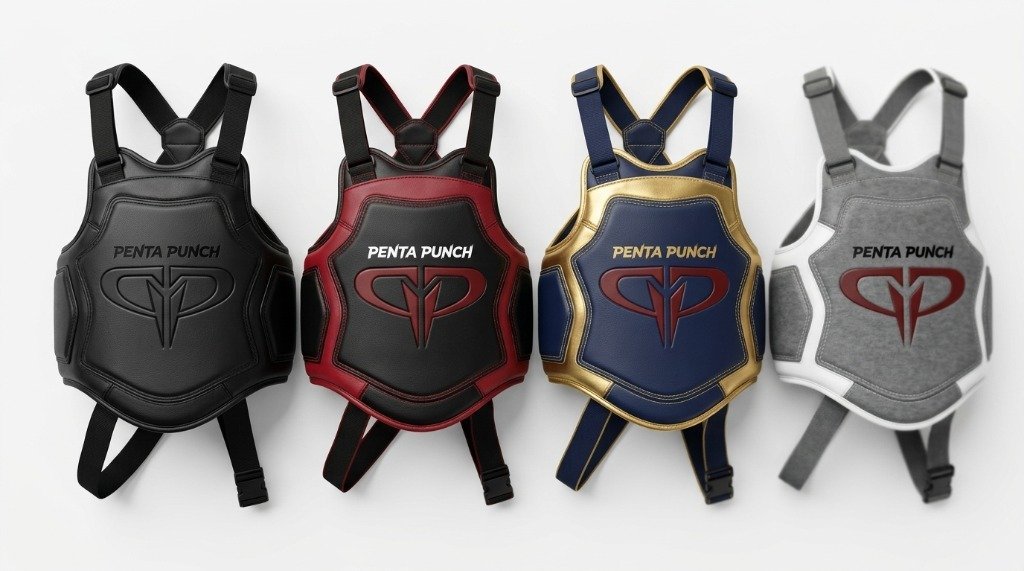
Every professional trainer knows the feeling. A sharp kick lands on a poorly padded chest guard, and the impact travels straight through. The foam compresses, fails to rebound, and the next round becomes something to endure rather than train through. It is a familiar complaint from boxing coaches, Muay Thai krus, and MMA corner teams worldwide and it almost always traces back to the same root cause: underengineered protection equipment built to a price point rather than a performance standard.
For brands sourcing coach body protectors, belly pads, and chest guards at scale, the challenge is compounded. Overseas buyers often receive samples that feel adequate, only to discover that production runs use cheaper foam layering, thinner shells, or weak strap hardware. The result is returns, complaints, and lost wholesale accounts.
This guide is written for importers, sports brands, and private label founders who need to source body protectors correctly from the outset — understanding the foam technology, material construction, ergonomic engineering, and OEM manufacturing process that separates a premium chest guard from a liability.
📌 Executive Summary: Sourcing Custom Body Protectors
- Foam Engineering: Premium body protectors use a 3-layer system high-density EVA outer (Shore 45–55), PU mid layer (Shore 30–40), and memory foam inner (Shore 10–20) for progressive impact absorption.
- Shell Materials: Full-grain cowhide leather (5–8 yr lifespan), Japanese microfiber/Amara (3–5 yr), and PU synthetic (2–4 yr) each suit different market tiers and brand positioning.
- Ergonomic Design: Heat-moulded anatomical rib-wrap panels and cross-back strap harnesses prevent rotation and shield floating ribs during oblique body shots.
- OEM Options: Private label from 25 units, ODM from 50 units, full custom OEM from 100 units — with lead times from 15 to 75 days depending on model.
1. What Is a Combat Sports Body Protector?
A body protector also called a chest guard, belly pad, coaching shield, or trunk protector — is a piece of wearable impact protection designed for use by coaches and sparring partners who receive kicks, punches, knees, and body strikes during training sessions.
Unlike focus mitts or Thai pads, which absorb strikes on the hands, a body protector is worn directly against the torso covering the sternum, ribs, solar plexus, and abdomen. In Muay Thai, MMA, kickboxing, and boxing conditioning drills, body protectors allow trainers to stay close, hold pads in position, and absorb realistic body shots without sustaining injury.
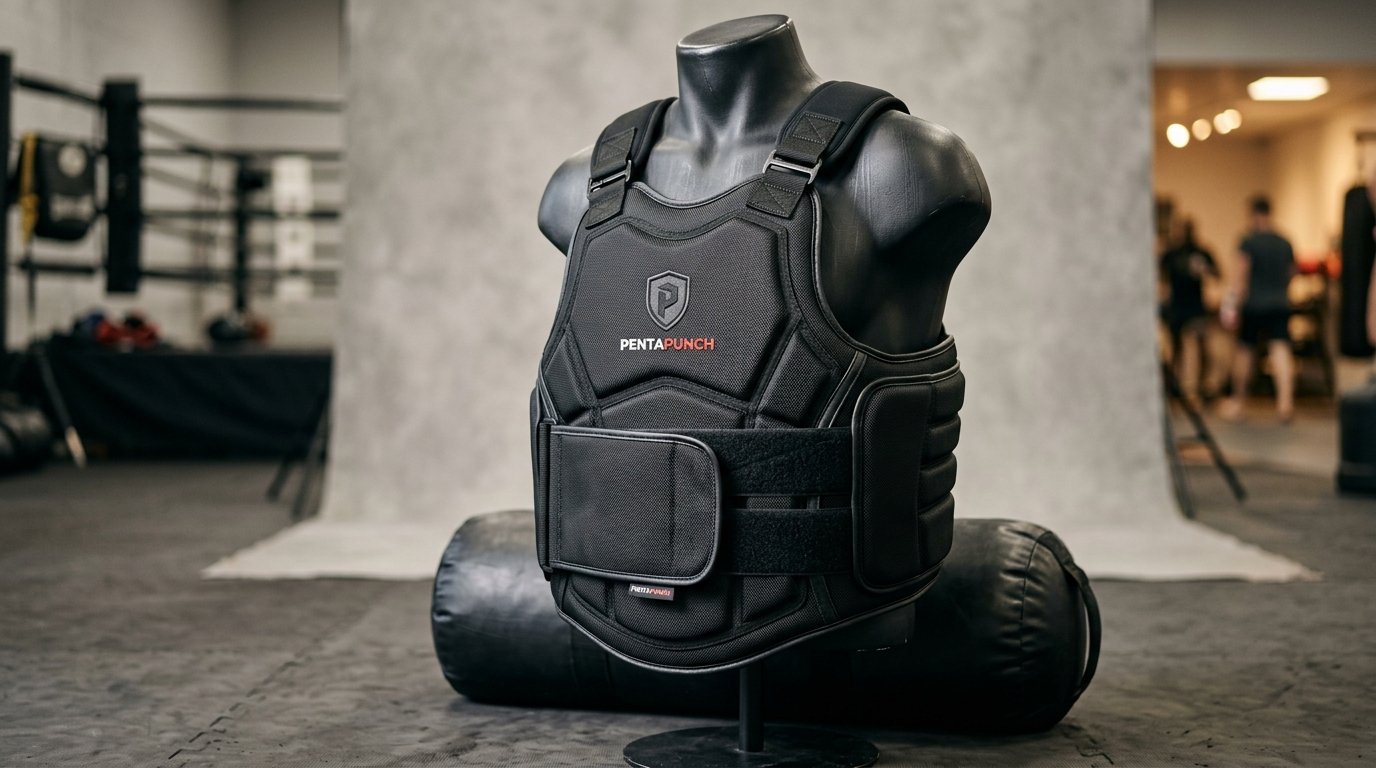
🛡️ Common Body Protector Variants
- Full-torso chest guard — covers sternum, ribs, and solar plexus
- Belly pad / belly protector — focused on lower abdominal zone
- Rib shield — compact lateral protection for sparring partners
- Thai-style body pad — thicker, longer coverage for heavy kicking drills
- Women’s body protector — anatomically contoured with chest relief panels
2. The Market Opportunity for Importers and Private Label Brands
Body protectors are high-margin, recurring revenue items for combat sports brands. Every gym that grows beyond beginner classes eventually needs multiple chest guards for its coaching staff. When a brand supplies quality protectors, those gyms return for replacements every 12 to 24 months creating predictable reorder cycles that wholesalers and distributors can rely on.
The demand base is broad. Boxing academies, Muay Thai gyms, MMA training centres, kickboxing clubs, taekwondo schools and military conditioning programmes all use body protectors regularly. For brands targeting the US, UK, German, Australian, and UAE markets, the equipment category is competitive but winnable with clearly differentiated manufacturing quality.
The biggest gap in the market is not the product itself it is verifiable manufacturing quality. Most buyers cannot assess foam density or shell construction from catalogue images. Brands that can confidently explain and demonstrate their manufacturing specifications win trust and repeat orders.
3. Foam Technology: The Heart of Protection Performance
The foam composition inside a body protector determines everything how much impact energy is absorbed, how quickly the pad rebounds, and how long it maintains that performance under repeated heavy training.
Consumer-grade body protectors typically use a single slab of medium-density foam. It works adequately for light sparring but collapses under regular heavy strikes. Premium manufacturing uses a multi-layer approach, combining foams with different densities and mechanical properties in a deliberate sequence.
The Multi-Layer Foam System Explained
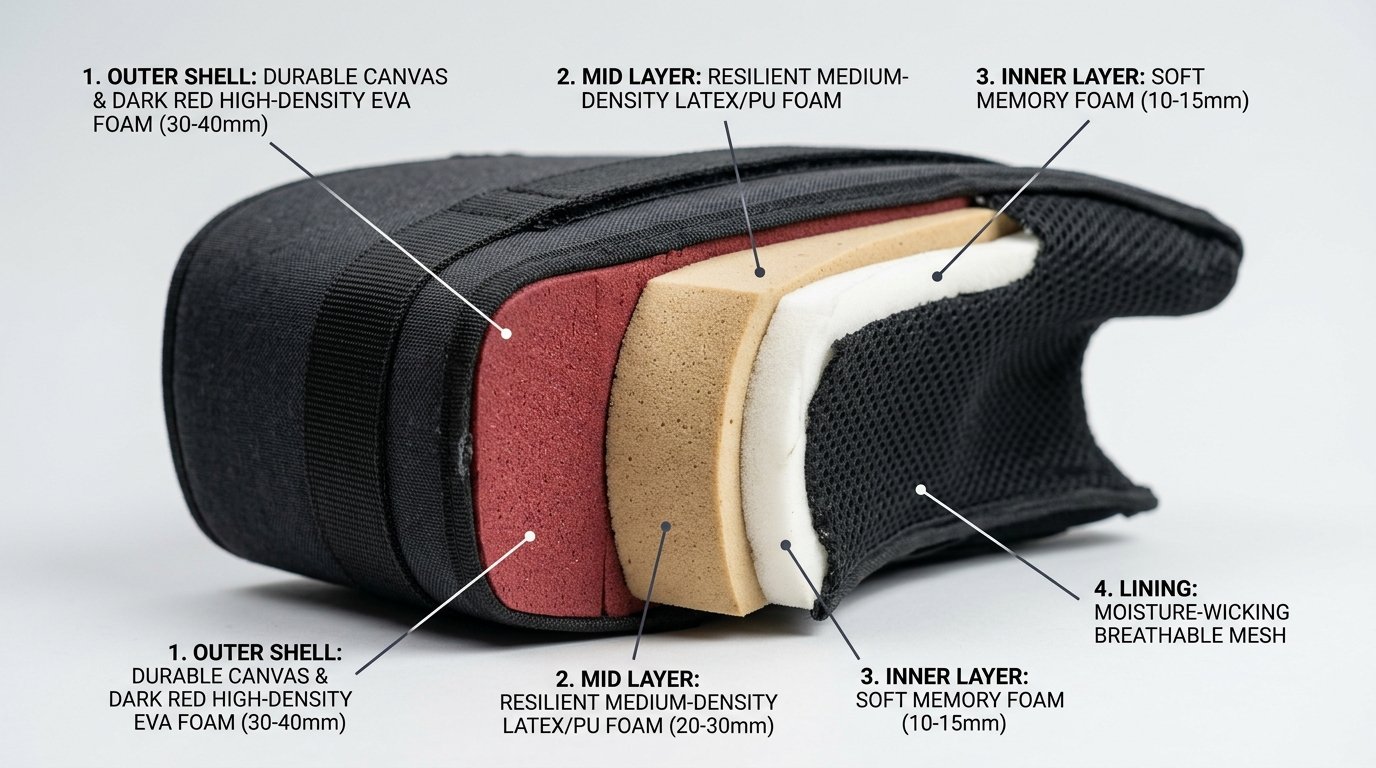
| Layer | Material | Shore Hardness | Thickness | Function |
|---|---|---|---|---|
| Outer layer | High-density EVA foam | Shore 45–55 | 30–40mm | Initial strike deceleration — rapid energy dissipation |
| Mid layer | Medium-density latex or PU foam | Shore 30–40 | 20–30mm | Secondary absorption — cushions residual impact energy |
| Inner layer | Soft memory foam | Shore 10–20 | 10–15mm | Body contact comfort — pressure distribution |
| Inner lining | Moisture-wicking nylon or mesh | — | 3–5mm | Sweat management — anti-microbial hygiene |
The outer EVA layer absorbs the kinetic shock of the initial strike. Hardness ratings between Shore 45 and 55 provide enough structural rigidity to decelerate fist or shin impact without transferring force directly to the wearer. The medium-density mid layer handles the residual energy that passes through preventing deep bruising on the sternum or lower ribs.
The innermost memory foam layer serves a different purpose. Rather than absorbing impact, it conforms to the wearer’s body shape and distributes pressure evenly across the torso surface. This eliminates hot spots areas where poorly fitted equipment concentrates force on a single rib or the solar plexus.
Cheaper alternatives skip the mid layer entirely, using a two-layer system that provides inadequate secondary absorption. For buyers placing bulk orders intended for heavy-use commercial gym environments, specifying a minimum three-layer system in the product brief is essential.
Understanding Foam Degradation Over Time
All foam eventually degrades that is unavoidable. What varies significantly between manufacturers is how long the degradation takes and how well the foam retains protection integrity during its usable lifespan.
Low-density foam used in cheaper products begins to compress permanently within three to six months of heavy commercial use. Once the foam takes a set meaning it no longer rebounds to its original thickness protection is compromised. The outer shell may look intact, but the internal structure has already failed.
Premium foam formulations combine closed-cell EVA with latex-derived compounds that resist permanent compression far more effectively. When specifying OEM production, buyers should request foam rebound test data measuring how quickly and completely the foam recovers after a standardised compression cycle.
4. Outer Shell Materials: Durability, Feel, and Cost Considerations
The outer shell of a body protector takes direct strike contact. It must be durable enough to resist surface cracking, abrasion from shin guards and bare knuckles, and UV degradation in gym environments.
| Material | Durability | Feel | Cost Tier | Best For |
|---|---|---|---|---|
| Full-grain cowhide leather | Excellent (5–8 yrs) | Premium, natural | High | Pro-tier brands, professional academies |
| Japanese microfiber (Amara) | Very good (3–5 yrs) | Leather-like, consistent | Medium–High | Vegan brands, mid-premium tier |
| PU synthetic leather | Good (2–4 yrs) | Smooth, affordable | Medium | Volume wholesalers, entry–mid tier |
| Reinforced vinyl | Fair (1–2 yrs) | Rigid, basic | Low | Budget gym equipment, high-turnover gyms |
For brands targeting professional academies and serious combat sports retailers in Western markets, full-grain cowhide or Japanese microfiber are the materials worth specifying. Both resist surface cracking and maintain structural integrity under repeated impact far more reliably than PU alternatives.
High-grade PU remains a viable choice for wholesalers supplying commercial gyms that prioritise value-for-money over longevity. A gym replacing chest guards every two to three years as standard maintenance often prefers a lower upfront cost over a premium leather option at twice the price.
5. Ergonomic Engineering: Why Shape Matters as Much as Foam
Even the most advanced foam layering system fails if the body protector does not fit the wearer correctly. A chest guard that shifts position under impact, rides up during body kicks, or squeezes the ribs uncomfortably will be removed and set aside defeating its entire purpose.
Premium OEM body protectors are engineered with anatomical panel shaping. Rather than a flat rectangular foam slab, the shell is pre-curved to match the natural contour of the human torso accounting for chest depth, rib flare, and abdominal profile.
Anatomical Panel Design and Rib-Wrap Contouring
The most effective body protectors feature a rib-wrap panel design where the outer shell curves laterally to partially wrap around the lower rib cage on each side. This protects the floating ribs and anchors the chest guard laterally, preventing it from rotating when receiving angled kicks or cross-body punches.
Quality factories achieve this by heat-moulding the outer EVA panels before covering them with the shell material. The foam is pressed into anatomical moulds at controlled temperatures, creating a permanent curvature that does not flatten out under repeated impact. Budget manufacturers simply skip the moulding process and use flat-cut foam panels — a structurally inferior shortcut that is immediately obvious when handling the equipment.
Shoulder Straps and Closure Systems
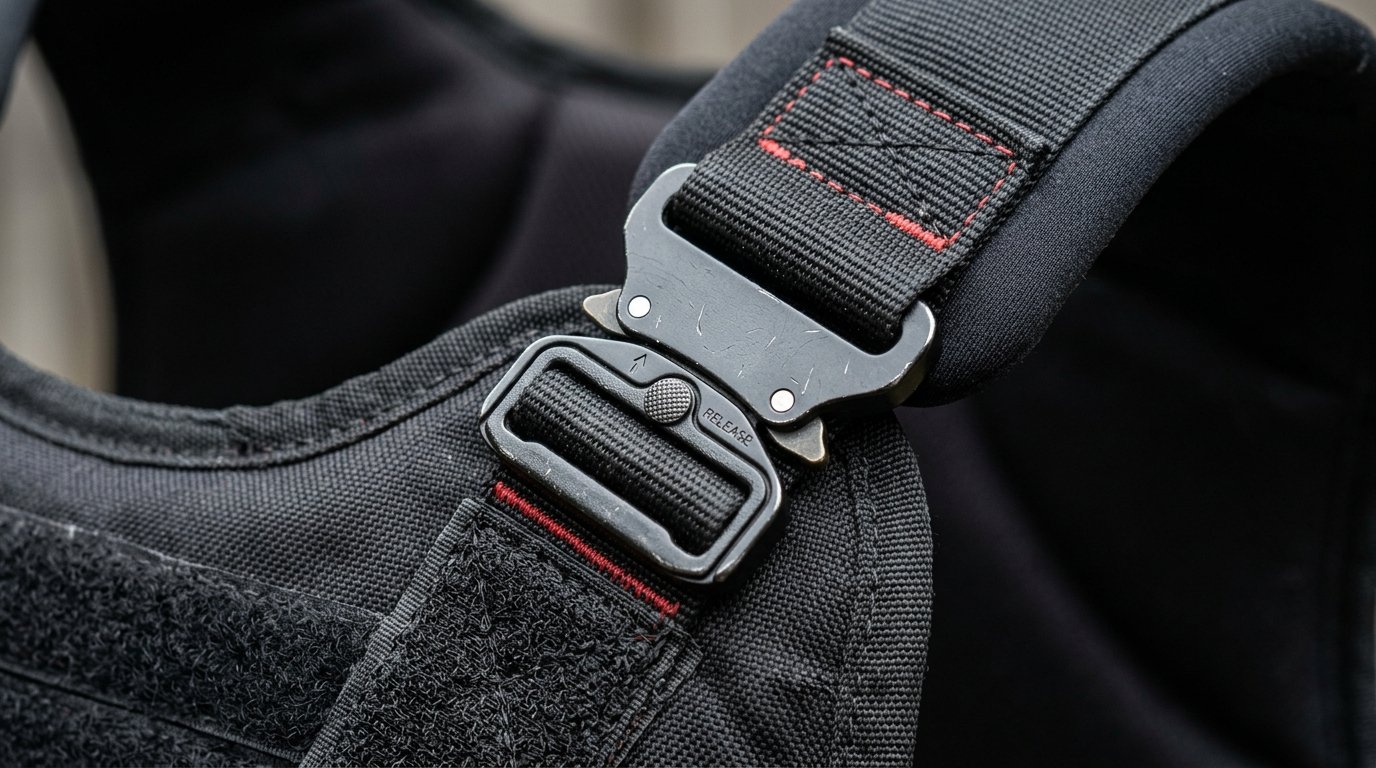
🔩 Key Manufacturing Standards for Strap Systems
- Shoulder straps: Minimum 50mm wide neoprene-padded webbing prevents shoulder dig under heavy glove pressure
- Side velcro panels: Hook-and-loop rated for 500+ attach/detach cycles; industrial-grade thermal bonding
- Back closure: Dual adjustable cross-straps with metal or nylon cam buckles rather than snap hooks
- Stitching: Bar-tacked stress points at all strap attachment points; double-stitched webbing loops
- Hardware material: Corrosion-resistant nylon or zinc-alloy buckles — avoid uncoated steel in sweat environments
For brands supplying Muay Thai gyms specifically, a cross-back harness system is worth specifying. Traditional over-the-shoulder straps work adequately for boxing drills, but during high-kick sessions a lateral kick that catches the edge of a poorly secured chest guard can rotate it substantially. Cross-back harnesses distribute tension across the upper back, providing far superior positional stability during dynamic kicking drills.
6. Thai-Style Belly Pads vs. Western Chest Guards
The Thai-style belly pad differs meaningfully from a conventional Western-style chest guard. Understanding these differences matters when specifying OEM production for different combat sports markets.
Traditional Thai belly pads are designed primarily to absorb knee and low kick strikes. They are generally larger in coverage area, extending further down to protect the lower abdomen and hip flexor zone, and use thicker overall foam packages — often 80–100mm total foam depth versus the 50–70mm typical in Western-style chest guards.
The outer panel on authentic Thai belly pads is typically full-grain cowhide or high-grade microfiber, with the lower panel extending into a flap designed to protect the groin transition zone during close-range clinch and knee work. This structural feature is often absent in budget belly pads a gap that brands targeting serious Muay Thai equipment schools should specifically address in their OEM specifications.
7. Private Label, OEM, and ODM Manufacturing Options
🏭 Pentapunch B2B Manufacturing Models for Body Protectors
1. Private Label (Low MOQ — from 25 units): Select from our catalogue of pre-engineered body protectors. Add your custom logo emboss, woven labels, and branded packaging.
2. ODM Custom Selection (from 50 units): Choose from our design library and customise colour, strap configuration, and shell material without full pattern development costs.
3. Full OEM Custom Manufacturing (from 100 units): Supply your foam specification table, shell material, strap configuration, and artwork for fully bespoke production matched to your brand’s exact standards.
| Model | Design Control | MOQ | Lead Time | Best For |
|---|---|---|---|---|
| OEM | Buyer provides full spec | 100–300 units | 45–75 days | Established brands with defined product lines |
| ODM | Factory designs; buyer selects | 50–150 units | 30–45 days | Growing brands scaling quickly |
| Private Label | Ready product + branding | 25–50 units | 15–30 days | Startups and Amazon sellers |
8. Quality Control Standards & Factory Precision Stitching
Quality control for body protectors should be specified in writing before production begins. Verbal agreements with factories rarely survive production runs intact.
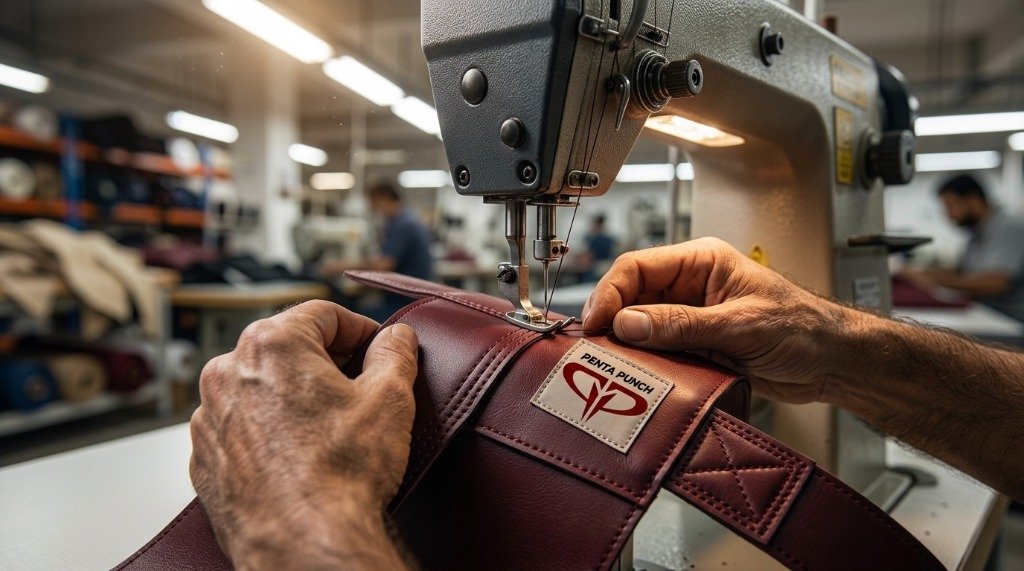
Pre-Production and In-Process QC Checklist
- Foam density verification: Request batch foam test sheets with Shore hardness readings per layer
- Shell material tensile strength: Specify minimum tensile strength ratings for outer shell material
- Stitching density: Minimum 8–10 SPI (stitches per inch) on all structural seams
- Bar-tack inspection: Verify bar-tacking at all high-stress strap attachment points
- Velcro adhesion test: Confirm hook-and-loop strips are thermally bonded, not adhesive-only
- Foam rebound test: Compress outer foam to 50% — confirm 90%+ rebound within 5 seconds
- Colour consistency: Verify shell colour against approved Pantone reference across full batch
- AQL inspection: Independent third-party AQL 2.5 Level II inspection before shipment
9. Buyer’s Specification Guide: What to Include in Your OEM Brief
A well-prepared OEM product brief is the single most important document a buyer can provide to a manufacturer. Vague briefs lead to misaligned samples, wasted development time, and production units that miss specification.
- Product type and intended discipline — boxing chest guard, Muay Thai belly pad, MMA body shield, women’s chest protector
- Coverage zone map — diagram indicating sternum, rib, abdominal, and groin flap coverage boundaries
- Foam specification table — layer count, material type, density (kg/m³), Shore hardness, and thickness (mm) per layer
- Outer shell material — specific material, colour Pantone codes, and finish (matte, gloss, embossed)
- Strap configuration — shoulder or cross-back harness, strap width, padding material, closure hardware type
- Logo placement artwork — vector file (AI or EPS), placement coordinates, application method
- Size range and measurement chart — torso dimensions per size, strap adjustment range
- Labelling and packaging requirements — care labels, hang tags, poly bag or retail box specifications
- Quality standards reference — AQL level, third-party inspection requirements, approved sample retention policy
10. Common Buyer Mistakes When Sourcing Body Protectors
1. Selecting Based on Catalogue Images
Two body protectors that look identical in product photography can differ enormously in foam specification, shell material quality, and strap hardware. Ordering a physical sample from any factory you intend to produce with is non-negotiable for protection equipment.
2. Accepting the First Sample as Production Standard
First samples from factories are often produced with more care than production runs. Always request a pre-production sample from the actual production batch before approving bulk manufacturing.
3. Under-specifying the Foam
Simply requesting “quality foam” in a product brief gives the factory full discretion to use whatever foam is cheapest. Specify layer count, type, density, and hardness values explicitly.
4. Skipping Pre-Shipment Inspection
Third-party inspection for body protectors is low cost relative to the expense of receiving an entire container of defective equipment. Budget for AQL inspection on every production order.
5. Neglecting Sizing Validation
Fit testing samples on real users before approving production is a step many brands skip. Chest guards that do not fit correctly are returned or simply unused — a loss for both the seller and the gym client.
Frequently Asked Questions (FAQ)
Q: What is the minimum order quantity for custom OEM body protectors?
Most Sialkot OEM manufacturers, including Pentapunch, offer custom body protector production from 50 units per style for ODM and 100 units per style for full OEM with custom foam specifications and shell materials. Private label options are available from 25 units.
Q: How long does OEM body protector production take?
Sample development typically takes 10–15 days. Once the sample is approved, bulk production for body protectors runs 30–45 days depending on order volume and customisation complexity.
Q: What foam types are available for OEM body protectors?
Standard options include EVA foam, high-density PU foam, latex foam, and memory foam. Premium body protectors use a multi-layer combination — typically EVA outer, PU mid, and memory foam inner — for optimal impact absorption and comfort.
Q: Can body protectors be manufactured without animal leather?
Yes. High-quality Japanese microfiber (Amara) and premium PU synthetic leather are widely used as vegan alternatives. Microfiber in particular offers leather-like durability and surface texture suitable for premium brand positioning.
Q: What is the difference between a boxing chest guard and a Muay Thai belly pad?
A boxing chest guard focuses protection on the sternum and upper ribs with a lighter foam package for punch absorption. A Muay Thai belly pad extends coverage down to the lower abdomen, uses thicker foam (80–100mm vs. 50–70mm), and often includes a groin-transition flap for knee and low kick drills.
Q: How do I specify foam density in my OEM product brief?
Specify foam density in kg/m³ and Shore hardness (Shore A or Shore C scale) for each layer. Example: Outer EVA — 45 kg/m³, Shore 50C; Mid PU — 35 kg/m³, Shore 35A; Inner memory foam — 50 kg/m³, Shore 15A.
Ready to Source Premium Body Protectors?
Tell us your foam specification, shell material preference, and target market. Our team will prepare a detailed OEM quote within 24 hours.